
Last updated November 2, 2026
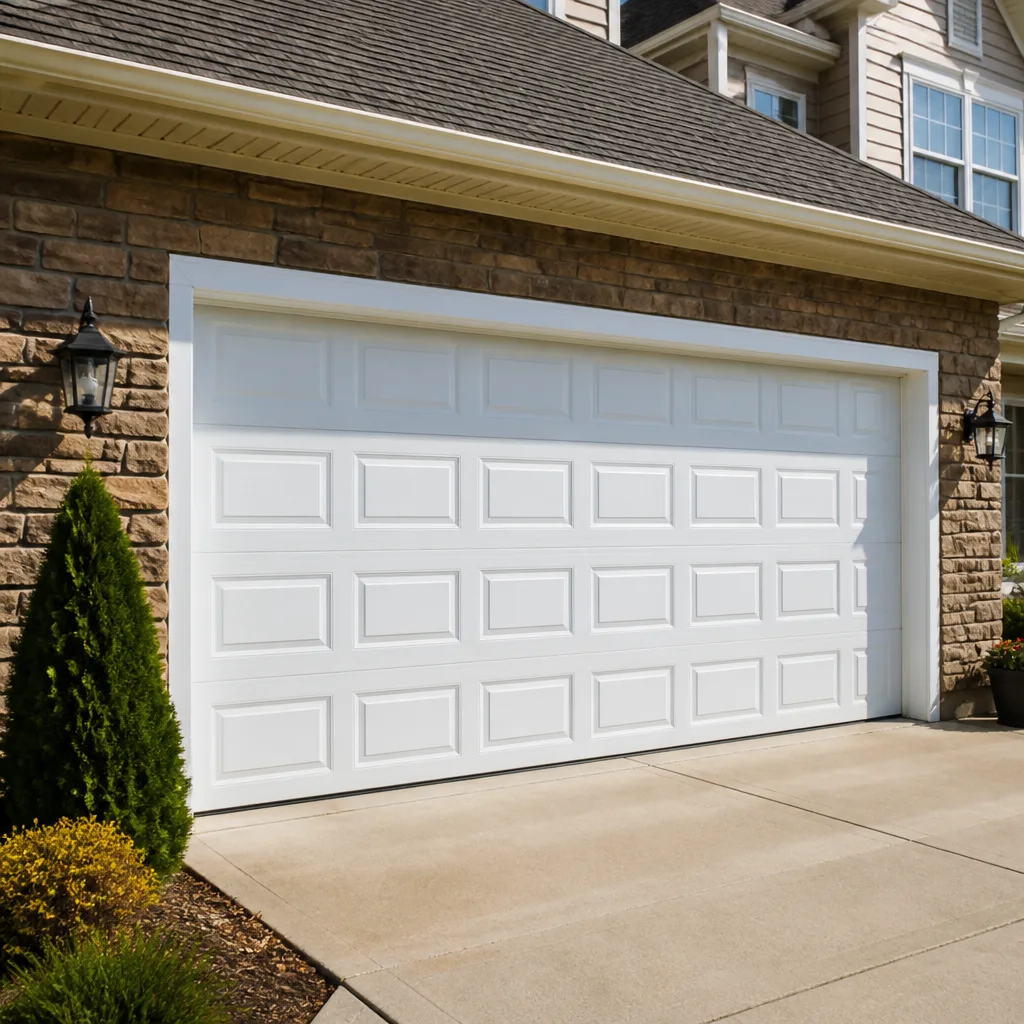 Raised-panel steel
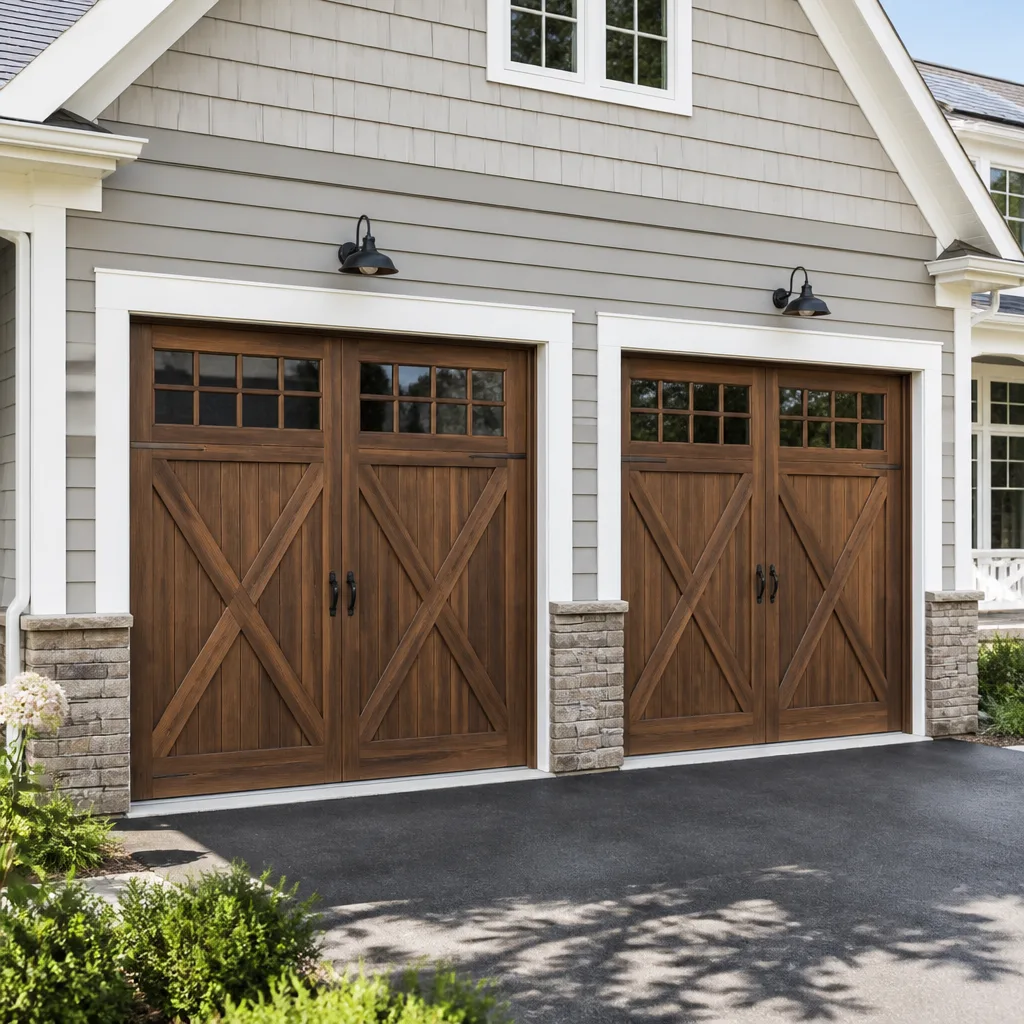 Carriage house
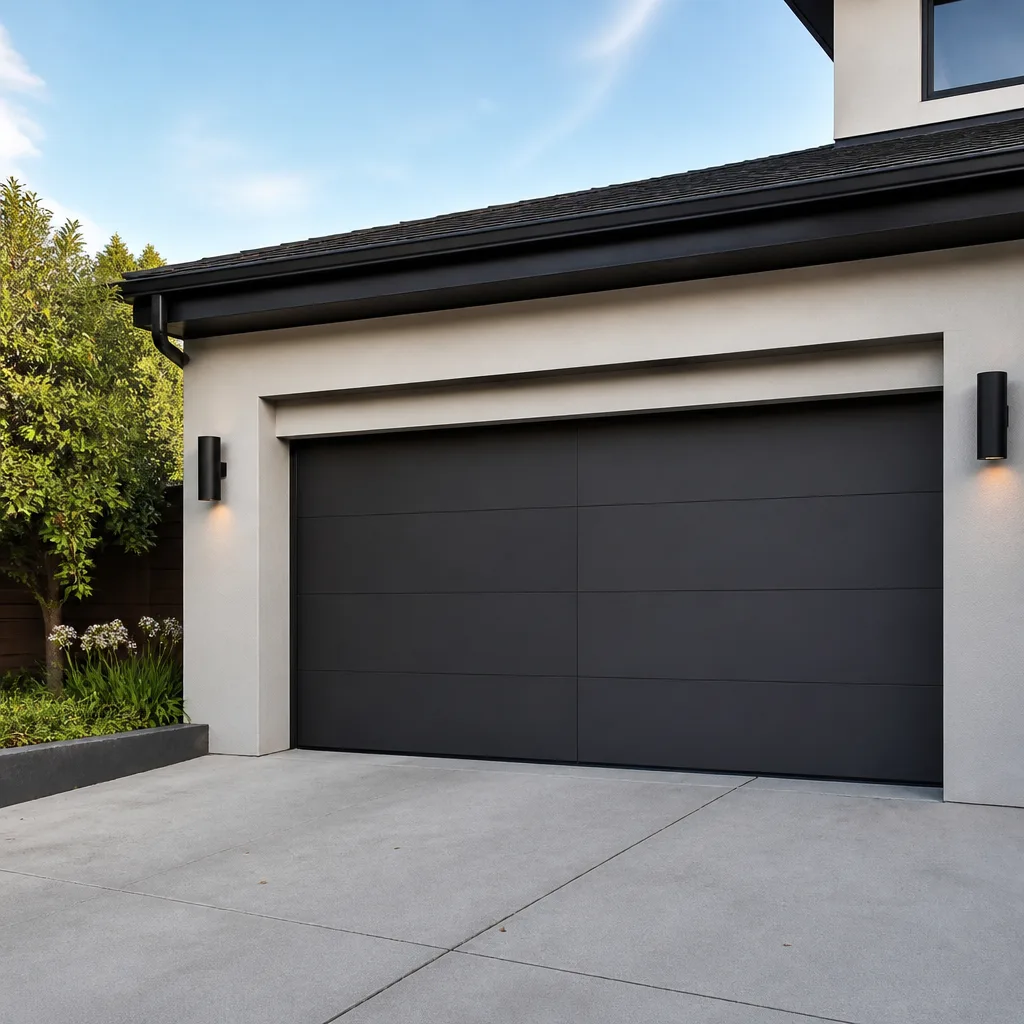 Modern flush
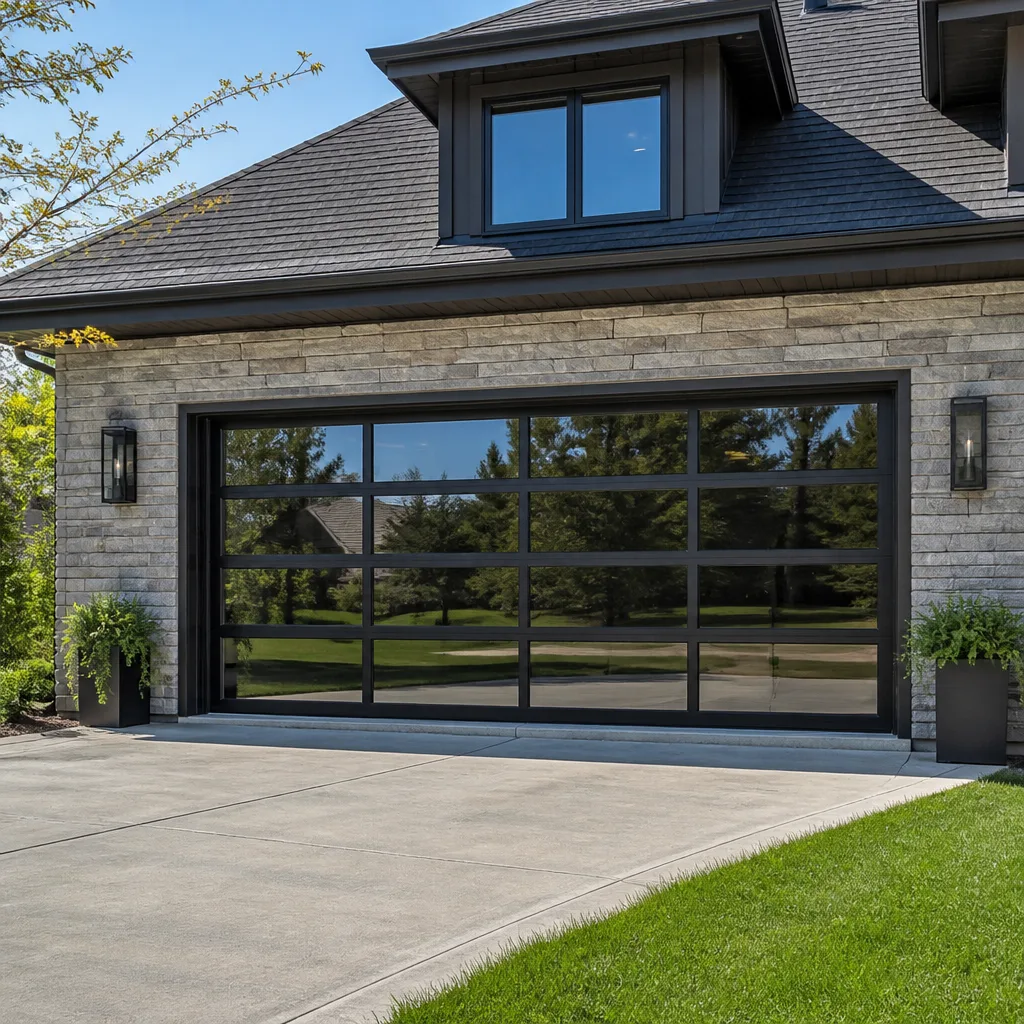 Full-view glass
 LiftMaster openers
 Chamberlain openers
Full 25-point door and opener safety check with every visit - springs, cables, rollers, tracks, and your LiftMaster or Chamberlain opener included
You get a price before we start. It does not change when the truck arrives.
Get your free estimateGarage Door Warning Signs: A Baldwin Park Homeowner’s Reference Guide
Here’s something most Baldwin Park homeowners don’t realize: the average garage door opens and closes roughly 1,500 times a year, and every single cycle tells you something about the health of the system. The door that shudders slightly on the way up, the opener that sounds a little more strained than it did last spring, the cable that looks just a touch looser than its partner – these aren’t quirks. They’re diagnostic data. We wrote this guide because we’ve watched too many Baldwin Park residents go from “I noticed something weird last month” to “the door won’t open and my car is trapped inside” on a Tuesday morning, and our more guides & resources can help prevent that. Learning to read these signs costs nothing. Ignoring them costs anywhere from $150 to over $1,000.
Quick Answer
The most common garage door warning signs are grinding or popping sounds during operation, visible asymmetry when the door moves, slow or jerky travel speed, shrinking remote range, and uneven wear on the bottom seal. Any one of these indicates a component is working harder than it should, and addressing it early typically costs a fraction of what you’ll pay after a full failure.
Styles & brands we work with
- Raised-panel steel
- Carriage house
- Modern flush
- Full-view glass
- LiftMaster openers
- Chamberlain openers
Table of Contents
- The Sound Test: Normal Noise vs. Failure Noise
- The Visual Asymmetry Test Most Homeowners Walk Past
- Opener Behavior Changes and What They Signal
- Bottom Seal Wear: When It’s Not Just the Seal
- Spring Health: What Popping Actually Means
- Three Conditions That Mean Stop Using the Door Now
- Cable Fraying and the Sunday Emergency Scenario
- The Balance Test: A 60-Second Diagnostic Anyone Can Do
The Sound Test: Normal Noise vs. Failure Noise
Every garage door makes some noise. A well-maintained door produces a steady mechanical hum – the sound of the opener’s motor doing predictable work and rollers traveling along metal track. That’s baseline. What we’re describing below are changes in that baseline, and changes are what matter. If your door has always made a particular sound, it’s probably benign. If the sound is new, or the pitch has shifted, something is changing inside the system. In Baldwin Park, where homes built in the 1960s and 1970s often still run original doors, we hear the full spectrum.
Here’s how to categorize what you hear:
- Grinding or metal-on-metal scraping: This usually means a roller has seized or its bearing has failed. The wheel is no longer rolling – it’s dragging along the track. Left alone, a seized roller can gouge the track and eventually pop out entirely.
- Popping or snapping during operation: This is almost always spring-related. Torsion springs under load make a distinct popping sound when sections bind or when the spring itself begins to separate from its cone.
- Squealing that wasn’t there before: Squealing often comes from dry rollers or hinges, but it can also signal that the door is slightly out of square and rubbing against the jambs. The fix might be as simple as lubrication, or it might be an alignment correction.
- Rattling that changes with door position: Loose hardware – bolts backing out of the track brackets, hinge screws that have worked loose. This is common in Baldwin Park because the dry summer heat cycles cause wood frames to expand and contract, gradually loosening fasteners.
- A single loud bang: That’s a spring breaking. If you hear this, the door is no longer safe to operate manually or with the opener. Call someone who repairs garage doors in Baldwin Park before touching anything.
The key distinction: normal noise is consistent and familiar. Failure noise is new, louder, or changes in character while the door moves. Trust your ear – it’s usually right.
Why Baldwin Park’s Climate Makes This Worse
Baldwin Park sits in the San Gabriel Valley, which means summer temperatures regularly push past 90 degrees. Metal expands in heat. Track sections that were perfectly aligned in January can develop slight misalignment by August, and that misalignment translates directly into new sounds. Additionally, the Santa Ana winds in fall and winter push fine grit and dust into everything – including roller bearings and track channels. That grit accelerates wear on moving parts. A garage door in coastal Long Beach lives an easier life than one in Baldwin Park, and the sounds reflect that, which is why seasonal garage door care for Baldwin Park matters so much.
The Visual Asymmetry Test Most Homeowners Walk Past
You walk past your garage door every day, but most people never actually look at it while it’s moving. Here’s a test that takes ten seconds and reveals more than most paid inspections. Open the door halfway and stop it. Now look at the horizontal lines of the door panels. Are they level? Now look at the gap between the door’s edge and the track on each side. Is it the same width top to bottom, left and right? If the answer to either question is no, one side of your door is carrying more load than the other.
That asymmetry is a pre-failure indicator. A door that’s out of square means one spring is doing more work, which means that spring is aging faster than its partner. It means the rollers on one side are pressing harder into the track. It means the opener is fighting uneven resistance every cycle. In our experience, a door that’s noticeably out of square usually has a spring or cable issue within six months if left unaddressed.
How to Check Your Door’s Symmetry
- Open the door to the halfway point and release the opener (pull the red emergency cord so the door is free of the motor).
- Stand back 10 feet and sight along the bottom edge of the door. You’re looking for a visible tilt.
- Check the cable tension on both sides. With the door closed, the cables running up each side should be taut. A slack cable on one side is an immediate red flag.
- Watch the door as it opens and closes. Does it hesitate or “walk” toward one side before straightening out? That stutter is the door telling you the spring tension is uneven.
If any of these checks reveal asymmetry, it’s worth a service call sooner rather than later. The $120 adjustment today prevents the broken spring and derailed door in a month or two. And if you have a LiftMaster opener with a safety reversal system, uneven door travel can trigger false reversals – a symptom we see fairly often in Baldwin Park homes with older LiftMaster and Chamberlain units.
Opener Behavior Changes and What They Signal
Your garage door opener is a surprisingly communicative device. It has a motor, a drive system, a logic board, and in modern units, Wi-Fi hardware. When any of those components starts failing, the opener usually tells you through changed behavior – not an error code, but a change in how it performs day to day. Here’s what specific changes mean.
Slower Travel Speed
If your door suddenly takes noticeably longer to open or close, that’s not the opener getting old. It’s the motor working against increased resistance. The usual culprits: a spring that’s losing tension, a door that’s out of balance, or a drive system (chain, belt, or screw) that’s binding. A properly balanced door requires very little motor effort. When the spring weakens, the motor compensates, and travel speed drops. This is especially common on Genie screw-drive openers, which are more sensitive to resistance changes than belt-drive units.
Increased Motor Noise During Operation
An opener that’s suddenly louder – straining, groaning, or laboring – is signaling mechanical drag somewhere in the system. It could be the door, but it could also be the opener’s own drive gear wearing. We see this frequently on Chamberlain chain-drive units after about 8-10 years of Baldwin Park service, particularly in homes near the 10 Freeway where vibration and dust exposure are higher.
Remote Range Shrinkage
When your remote only works from 20 feet away instead of 50, something is interfering with the receiver. This can be a failing logic board, but it’s also commonly caused by LED bulbs installed in or near the opener. Yes, really – certain LED bulbs emit radio frequency interference that blocks remote signals. If you recently replaced your garage light bulb with an LED, try a different brand before assuming the opener is dying. If the range issue persists, the receiver itself may be failing, and that’s an opener repair situation.
Intermittent Operation or False Reversals
If the door starts to close and then reverses for no visible reason, start by checking the safety sensors at the bottom of the track. They may be misaligned – a common issue after a car bumper knocks a sensor bracket out of position. But if the sensors are aligned and the door still reverses, the problem is often more subtle. We’ve traced false reversals on Raynor and Genie systems to slight track misalignment that makes the opener’s force monitor think it hit an obstruction. The opener is doing its job; it’s detecting a real problem you can’t see.
Bottom Seal Wear: When It’s Not Just the Seal
The rubber strip along the bottom edge of your garage door is one of the most abused components on the entire assembly. It gets compressed thousands of times, dragged across the concrete, baked by reflected heat, and occasionally frozen to the slab on cold winter mornings in the San Gabriel Valley. When you see wear on the bottom seal, the natural conclusion is “I need to replace the seal.” Sometimes that’s the whole story. Sometimes it isn’t.
Here’s the diagnostic nuance: the wear pattern on a bottom seal tells you whether the door is sitting evenly. Replace a worn seal and watch it for a few weeks. If the new seal starts wearing faster on one side than the other, the door itself is out of square. The seal is just the canary. This matters because a door that’s out of square is stressing its springs, cables, and hinges, and those repairs are significantly more expensive than another seal replacement.
What Different Wear Patterns Indicate
- Even wear across the entire seal: Normal age. Replace the seal and move on with your life.
- Heavy wear on one side only: The door is tilted, which means the spring on that side has lost tension or the cable has stretched. The seal is not the root problem.
- Wear concentrated in one or two spots: The concrete slab has a high spot or the door is hitting debris on a particular track section. Check the track for dents at that point.
- Seal tearing away from the aluminum retainer: The retainer itself is damaged or the door has been closing on objects – or in Baldwin Park, on the accumulated grit that builds up in the track channel during Santa Ana season.
The bottom line: a $40 seal replacement is a cheap fix, but if the seal wears unevenly after replacement, you have a structural issue that will cost more later. The door is telling you something about its alignment. Listen.
Spring Health: What Popping Actually Means
Garage door springs are the most dangerous component in the system and the most misunderstood. The average torsion spring is rated for about 10,000 cycles, which translates to roughly 7-10 years of normal use. When a spring reaches the end of its useful life, it doesn’t usually fail silently. It gives warning. The key is recognizing those warnings before the spring breaks – because a broken spring is not a DIY project, and waiting for it to fail means waiting for the most expensive possible version of the repair.
Here’s what to listen and look for:
- Popping when the door moves: This sound comes from the spring coils binding and releasing as the door travels. It means the spring has begun to fatigue or the coils are no longer evenly spaced. A healthy torsion spring is silent.
- A visible gap in the spring coil: Torsion springs sit horizontally above the door. If you look up and see a gap wider than the others between two coils, the spring has begun to separate. That gap is the first stage of a full break.
- The door feels heavier when operated manually: Disengage the opener and try lifting the door by hand. A properly balanced door should lift smoothly with moderate effort and stay in place at the halfway point. If it feels heavy or drops when you let go, the spring has lost significant tension.
- The opener struggles on startup: The first inch of movement requires the most force. A healthy spring shares that load. A failing spring makes the opener strain visibly at the beginning of each cycle.
We work on Genie, LiftMaster, Chamberlain, and Clopay systems in Baldwin Park every week, and the pattern is consistent: homeowners who follow a guide like How to Hire a Garage Door Contractor in Baldwin Park and address spring health early pay for a spring replacement on their schedule. Homeowners who ignore the popping pay for an emergency call when the spring snaps – often when the door is open and the full weight drops onto the opener’s drive system. That single event can damage the opener, bend the track, and in worst cases, damage the door panels themselves.
Safety note: Torsion springs store a tremendous amount of energy, even when the door is closed. If your spring is showing signs of failure, do not attempt to adjust, remove, or even closely inspect it. This is one repair that belongs with a trained professional, full stop.
Three Conditions That Mean Stop Using the Door Now
Most garage door issues allow for a scheduled repair. A noisy roller can wait a few days. A shrinking remote range is an inconvenience. But there are three conditions that mean the door should not be operated at all – not manually, not with the opener – until a professional has assessed it. If you find yourself in one of these situations in Baldwin Park, call for service before touching the door again.
- A broken or frayed cable: The cables are what keep the door connected to the spring system and travel along a defined path. If a cable has snapped or is visibly fraying, the door is no longer under controlled tension. Operating it risks the door falling suddenly, which can cause serious injury and usually destroys the track, panels, or both.
- A broken spring: If you hear a loud bang and the door no longer opens – that’s a broken torsion spring. The door is now dead weight, often 150-300 pounds depending on size and material. The opener is not designed to lift that much unassisted. Attempting to operate it will burn out the opener’s motor and possibly cause the door to fall.
- Visible structural damage to the door itself: If a panel is cracked, dented inward, or pulling away from the hinges, the door’s structural integrity is compromised. Continued operation stresses the damaged area and the panels adjacent to it. What starts as one damaged panel becomes a full door replacement when the stress propagates.
In any of these three scenarios, the door should be left in whatever position it’s in. If it’s open and you need the car out, disengage the opener and have two or more able-bodied adults support the door while opening it manually – but honestly, if you’re in this situation, the better move is to call a professional. The risk of injury is real, and we’ve responded to enough emergency calls in Baldwin Park to know that the second attempt at moving a damaged door is often when things go wrong.
Cable Fraying and the Sunday Emergency Scenario
We mentioned cables in the previous section, but they deserve their own discussion because cable failure is the most common reason for emergency garage door calls in Baldwin Park. The scenario plays out the same way almost every time: a homeowner notices the door making a strange sound or looking slightly uneven for a few weeks. Then on a Saturday afternoon or Sunday morning, when the door is half-open, a cable snaps. The door slams or jams, and suddenly the car is trapped or the garage is unsecured.
Cables don’t fail suddenly without preceding damage. They fray. They develop individual broken strands. They stretch slightly and lose their factory coating. All of these are visible if you look. The problem is that most homeowners never look at their cables – they’re tucked along the sides of the track and easy to miss.
How to Spot Cable Damage Before It Fails
- Look for “fuzzy” spots: A healthy cable is smooth and tightly wound. Fraying looks like fuzzy patches where individual strands have broken and separated from the main bundle.
- Check for rust: Cables in Baldwin Park garage doors are exposed to some humidity, especially during winter months and in older homes without adequate ventilation. Rust weakens cable steel and accelerates strand breakage.
- Compare left and right tension: With the door closed, both cables should be equally taut. A slightly loose cable on one side means that side is no longer sharing the load equally.
- Inspect where the cable meets the drum: The cable wraps around a drum at the top of each track. If the cable is not seating cleanly in the drum grooves – if it’s overlapping or sitting at an angle – the door is out of balance and the cable is wearing against itself.
When we repair a snapped cable in Baldwin Park, the fix usually involves both cables, not just the one that broke. Replacing one cable on a system where the other cable is the same age just creates a second failure waiting to happen. We replace both cables as a set, adjust the spring tension to factory spec, and test the balance. That’s the difference between fixing the symptom and fixing the system. If you’re at the point where you need a full upgrade, our garage door installation team handles both hardware and opener replacement as a single job.
The Balance Test: A 60-Second Diagnostic Anyone Can Do
Every warning sign in this guide circles back to one root cause: a door that’s out of balance. When door and spring are in proper relationship, the opener does minimal work, the cables stay evenly tensioned, the rollers travel smoothly, and nothing makes unusual noise. When the balance is off, every component degrades faster. Here’s a simple test you can do right now in your Baldwin Park garage.
The 60-Second Balance Test
- Close the door completely.
- Pull the red emergency release cord on the opener. This disengages the door from the motor.
- Lift the door manually until it’s about waist high (roughly the halfway point).
- Release the door and step back.
A properly balanced door will stay at the halfway point on its own – the spring tension exactly counteracts the weight of the door. If the door drops, the spring has too little tension. If the door shoots upward, the spring has too much tension (less common, but it happens after an inexperienced adjustment). If one side of the door sits lower than the other at the halfway point, the cable on that side has stretched or the spring has developed a weak side.
Run this test every few months. It costs nothing and takes less time than reading this guide. What it tells you about spring health, cable condition, and overall system balance is the same information a technician charges a service fee to gather. If the door fails any part of the test, you’ve found a problem before it found you.
Key Takeaways
- New sounds are diagnostic data – a grinding or popping noise means a component is failing, not just “being old.”
- A door that’s visibly uneven when moving is overloading one spring, one cable, and one side of the track.
- Opener changes like slower travel, louder operation, or reduced remote range are early warnings of mechanical drag or electronic failure.
- Bottom seal wear that’s uneven indicates a door out of square, not just an old seal.
- Popping springs are pre-failure indicators – a spring replacement on your schedule costs less than an emergency call.
- Broken cables, broken springs, and structural damage mean the door should stay exactly where it is until a professional arrives.
- The 60-second balance test is the single best free diagnostic available to any Baldwin Park homeowner.
See the difference
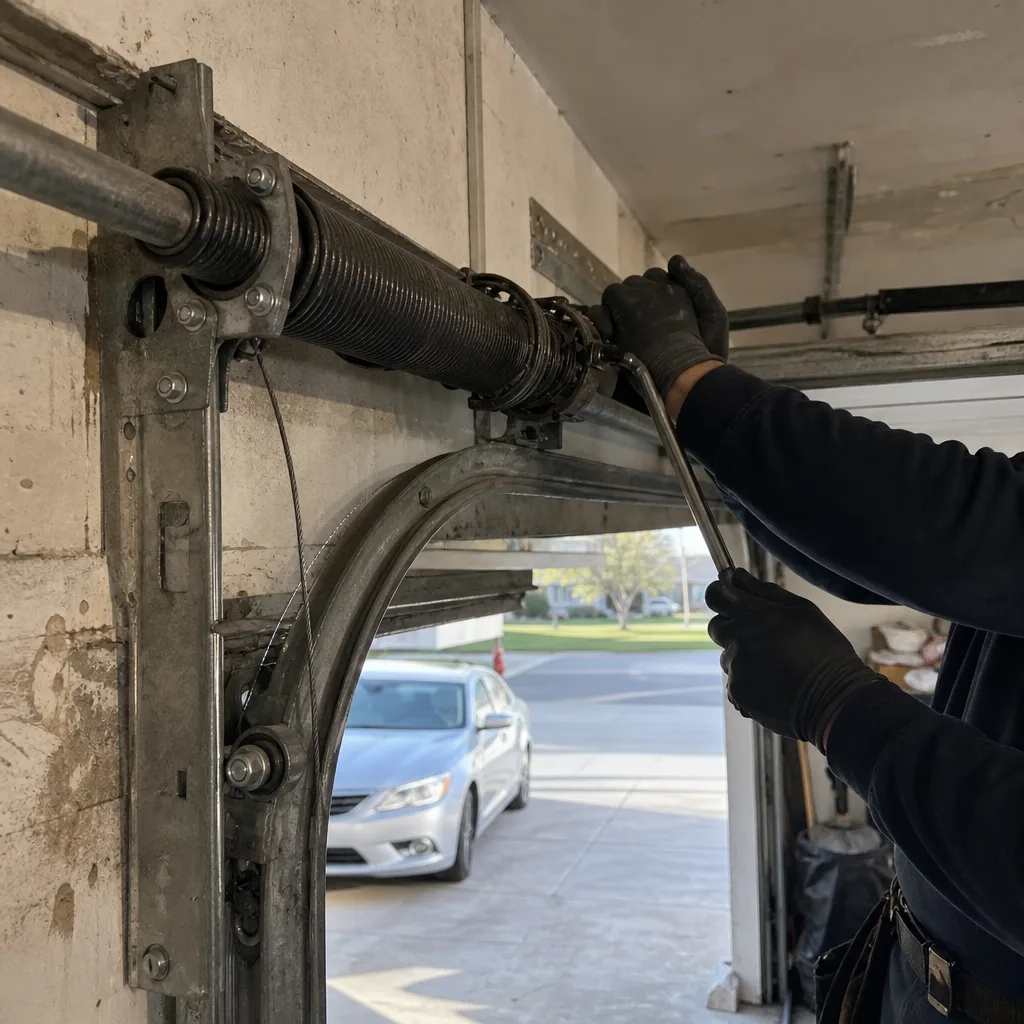 Before
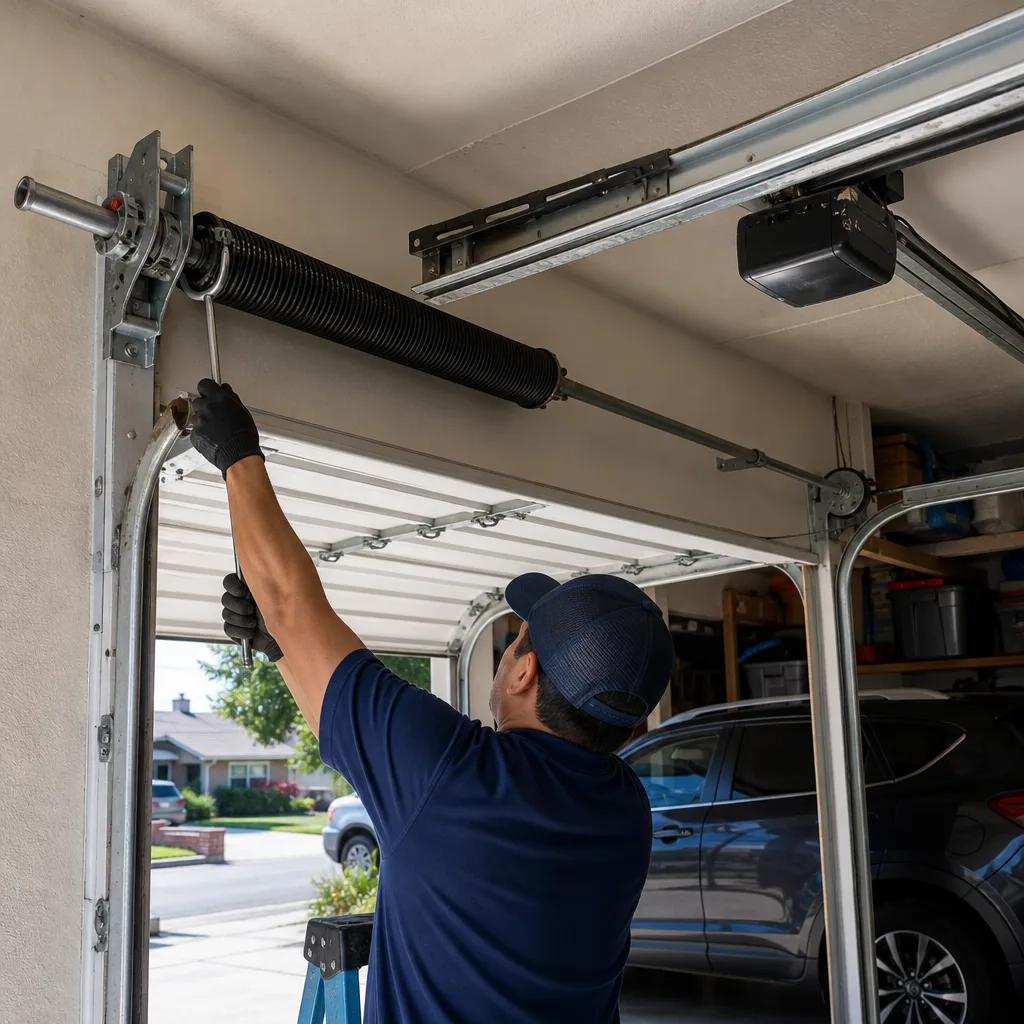 After
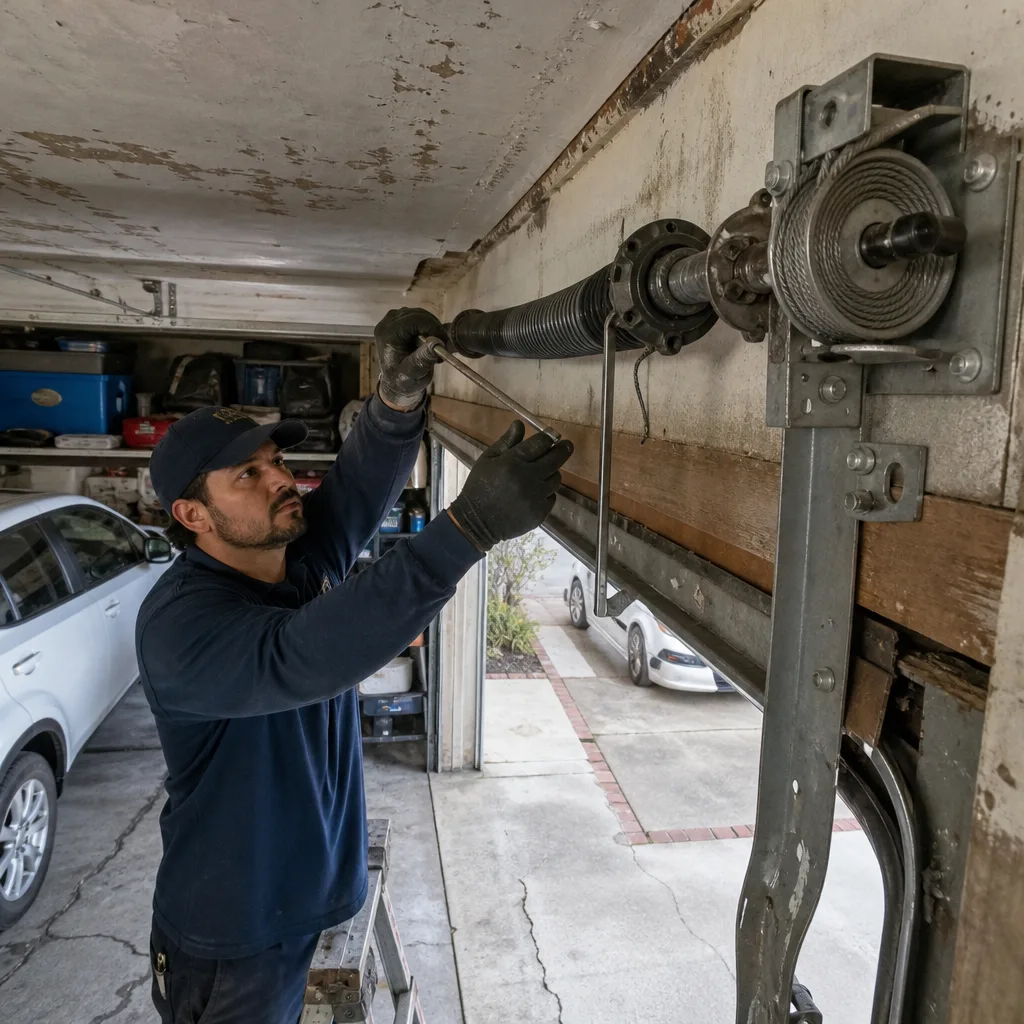 Before
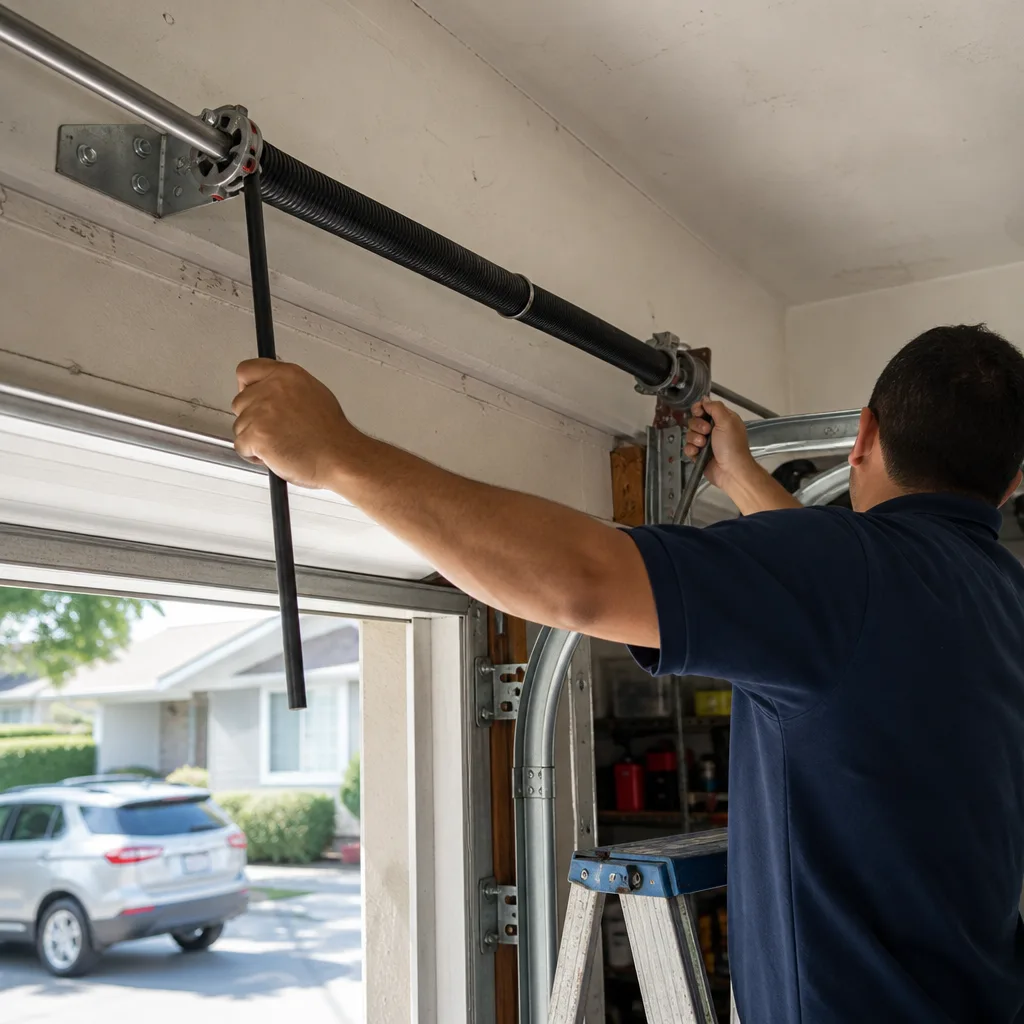 After
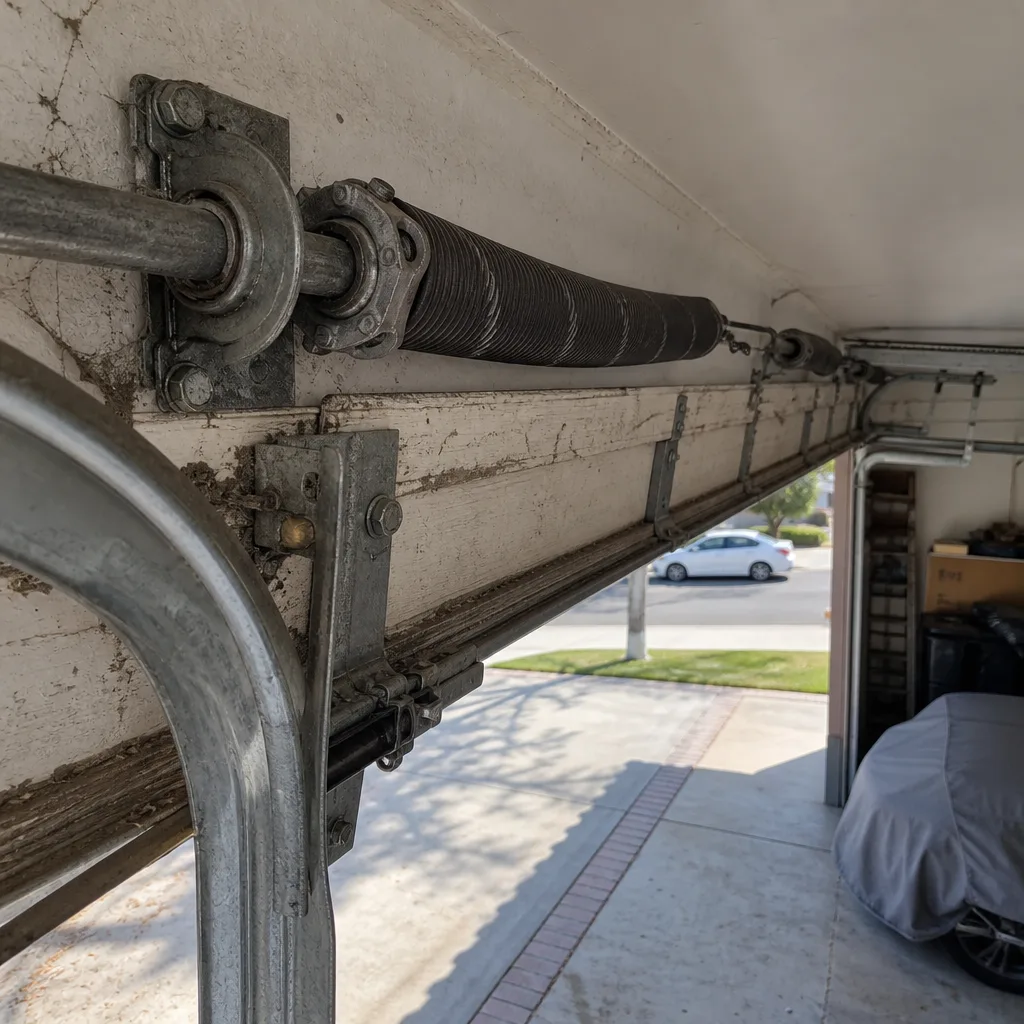 Before
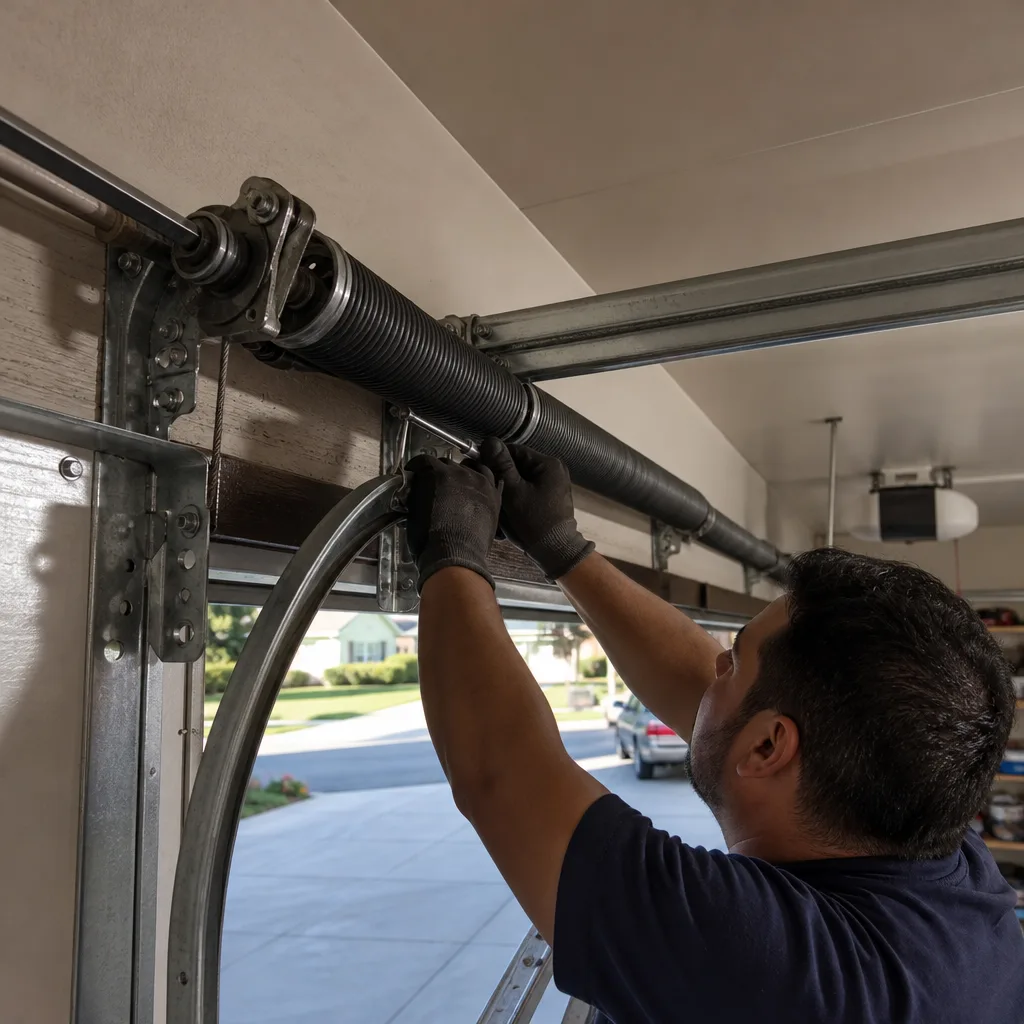 After
Common Mistakes to Avoid
- Lubricating a noisy door without addressing the cause: A shot of WD-40 quiets a squeaky roller for a week, but if the roller is seized or the track is misaligned, the noise comes back. And WD-40 is not the right lubricant for garage doors anyway – it’s a solvent that strips the good grease away. Use white lithium grease or a dedicated garage door lubricant on moving metal parts.
- Replacing the bottom seal without checking door squareness: If the door is tilted, the new seal will wear the same way the old one did. Fix the alignment first, then replace the seal.
- Continuing to use the opener after a spring breaks: We covered this above, but it bears repeating because it happens constantly. The opener will try to lift the full weight of the door, burn out its motor, and possibly damage the drive system beyond repair. One broken spring becomes a spring replacement plus an opener replacement.
- Ignoring a door that’s slow in winter but fine in summer: Baldwin Park gets cold enough in December and January that metal contracts and track alignment shifts slightly. But “it only does it when it’s cold” is still a symptom – the door was marginally aligned to begin with, and the cold is exposing the tolerance issue.
- Adjusting spring tension without experience: Torsion springs store lethal energy. If the balance test shows a tension problem, the fix involves winding or unwinding springs that can seriously injure someone who doesn’t know exactly what they’re doing. This is not a “watch a YouTube video” repair.
- Assuming the opener needs replacing when the remote range shrinks: Check the LED bulb interference issue first. Then check the antenna wire on the opener itself, which sometimes hangs down behind the unit and gets pinched. Only after eliminating those should you assume the receiver is failing.
- Putting off the $150 fix until it becomes the $400 emergency: This is the entire thesis of this guide. The warning signs are there. The choice is yours.
When to Call a Professional
Some garage door maintenance is homeowner territory – lubricating rollers, replacing a bottom seal, tightening visible bolts, cleaning the safety sensors. But the moment you’re dealing with springs, cables, track alignment, or opener internals, the risk-to-reward math changes fast. These components are under tension, they’re heavy, and a mistake during repair often makes the original problem worse and more expensive. If your balance test fails, if you see cable fraying, if you hear popping from the spring area, or if the door has become too heavy to lift manually, stop diagnosing and start dialing. Foxwood Garage Door Repair offers free estimates in Baldwin Park – call (866) 714-6304 and we’ll assess the door, confirm the diagnosis, and give you an exact price before any work begins.
Frequently Asked Questions
Most garage door repairs in Baldwin Park fall between $150 and $400, depending on the specific component and choosing the right garage door brand can affect long-term costs. A roller replacement or track alignment typically runs $150 to $250, a spring replacement $250 to $400 for a standard torsion spring pair, and a full panel replacement can range from $300 to $800 depending on the door material and brand. The price is always quoted and agreed before any work begins. Call (866) 714-6304 for an exact quote – estimates are free.
You can, but you shouldn’t, because the grinding almost always indicates a seized roller or metal-on-metal contact that’s actively damaging the track. A few more weeks of operation can turn a $180 roller replacement into a $500 track section replacement plus realignment. The safest move is to minimize use and get the door inspected. The balance test in this guide will tell you if the problem extends beyond the roller.
Slower travel speed usually means the opener’s motor is working against increased resistance from a weakening spring, a door that’s out of balance, or a drive system that’s binding. The opener is telling you it’s straining. If the problem is the spring, fixing it now prevents a broken spring later – and the spring replacement is more affordable than the emergency call after it fails.
Yes. We work on LiftMaster, Chamberlain, Genie, Clopay, Amarr, Wayne Dalton, Craftsman, and Raynor openers, and our techs are factory-familiar with each brand’s specific programming and part specs. That means a Genie screw-drive gets diagnosed and repaired to Genie’s spec, not a generic “close enough” adjustment. For opener-specific issues, see our garage door opener repair page.
Stop using the door immediately and leave it in whatever position it’s in. A snapped cable means the door is no longer under controlled tension, and operating it risks a sudden drop that can cause serious injury and significant property damage. Call (866) 714-6304 – we respond to cable failures across Baldwin Park and can usually have a tech at your home the same day.
Run the 60-second balance test every two to three months, and do a visual check of the cables, springs, and bottom seal at the same time. Seasonal changes in Baldwin Park – hot summers, Santa Ana winds, cooler winters – put different stresses on the system, so a quarterly check catches problems in the same season they develop. If you’d prefer a professional eye, we’ll assess the entire system as part of any service call.
The Bottom Line
Your garage door is the heaviest moving object in your Baldwin Park home, and it’s also the most communicative – if you know what to listen and look for. New grinding sounds, uneven movement, slower travel speed, shrinking remote range, and asymmetrical seal wear are all early warnings that a component is failing. Every one of those warnings is cheaper to address before the failure becomes complete. The balance test takes 60 seconds and gives you a professional-grade diagnosis for free. If the test reveals a problem, or if you’ve spotted any of the signs in this guide, call Foxwood Garage Door Repair at (866) 714-6304. We’ll diagnose the issue, quote the repair upfront, and fix it to the manufacturer’s spec – because a garage door that’s fixed right doesn’t need fixing twice.
Written by the team at Foxwood Garage Door Repair, serving Baldwin Park since 2015.