
Last updated November 2, 2026
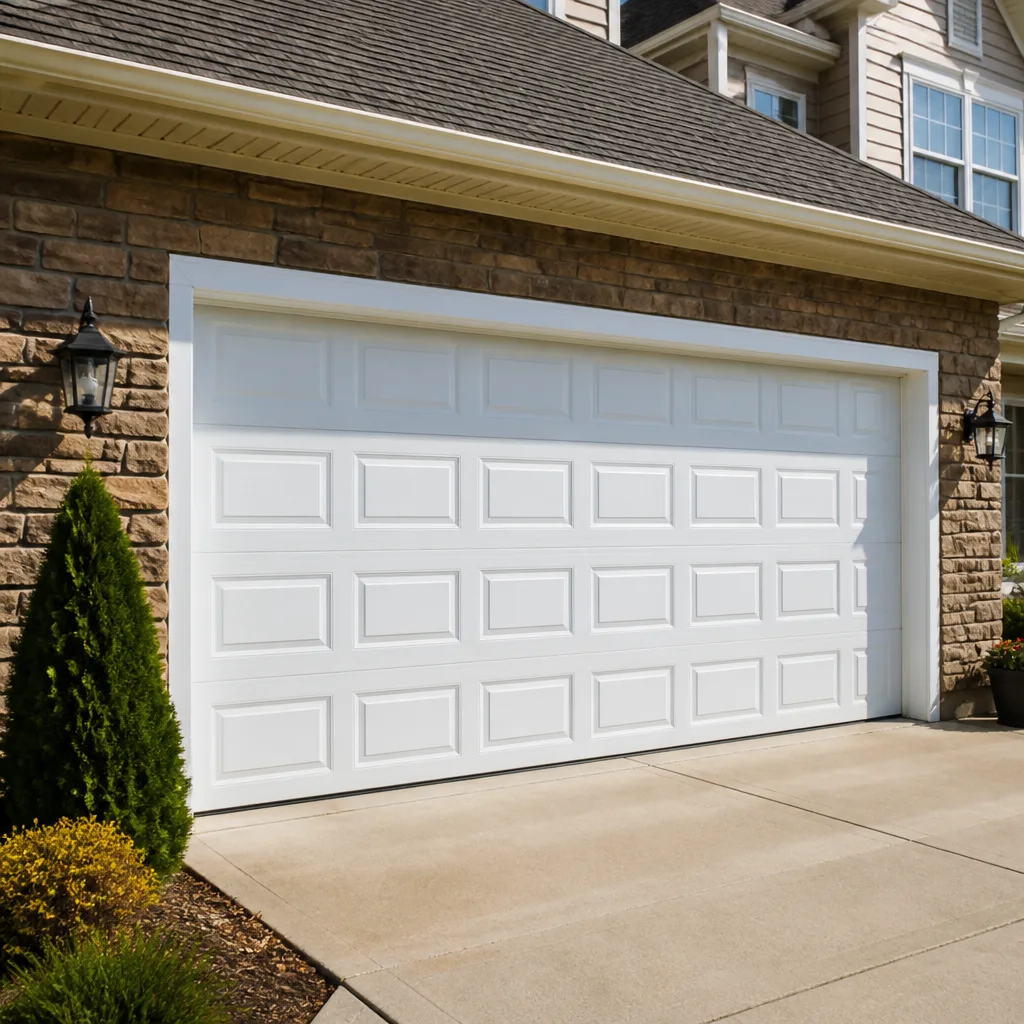 Raised-panel steel
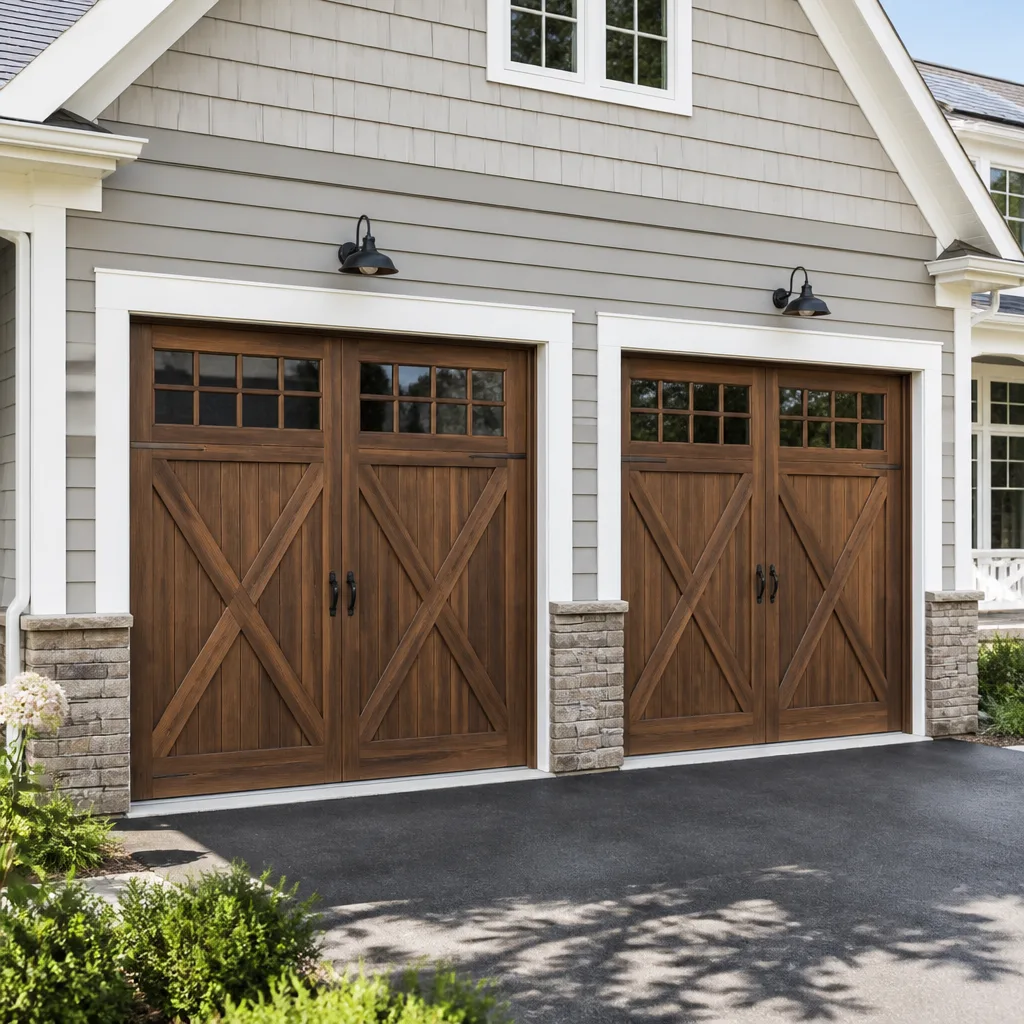 Carriage house
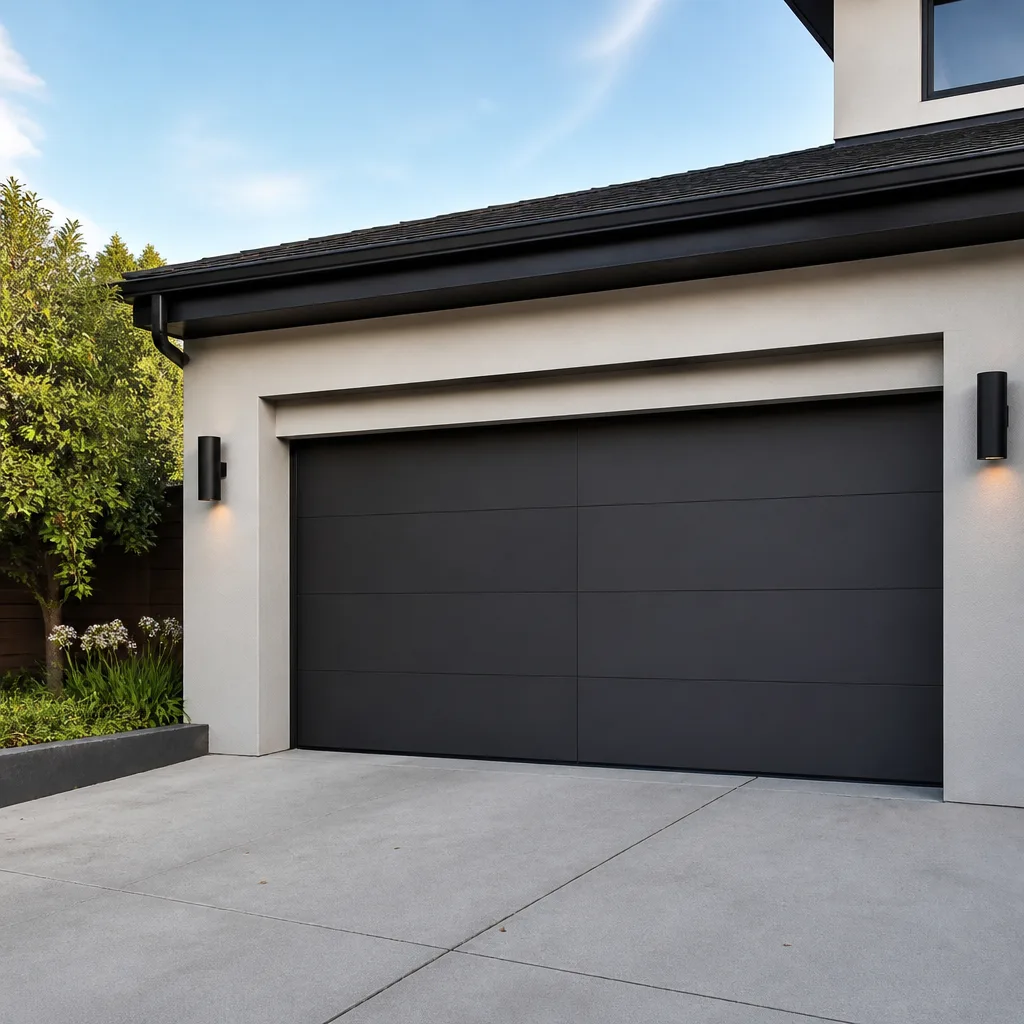 Modern flush
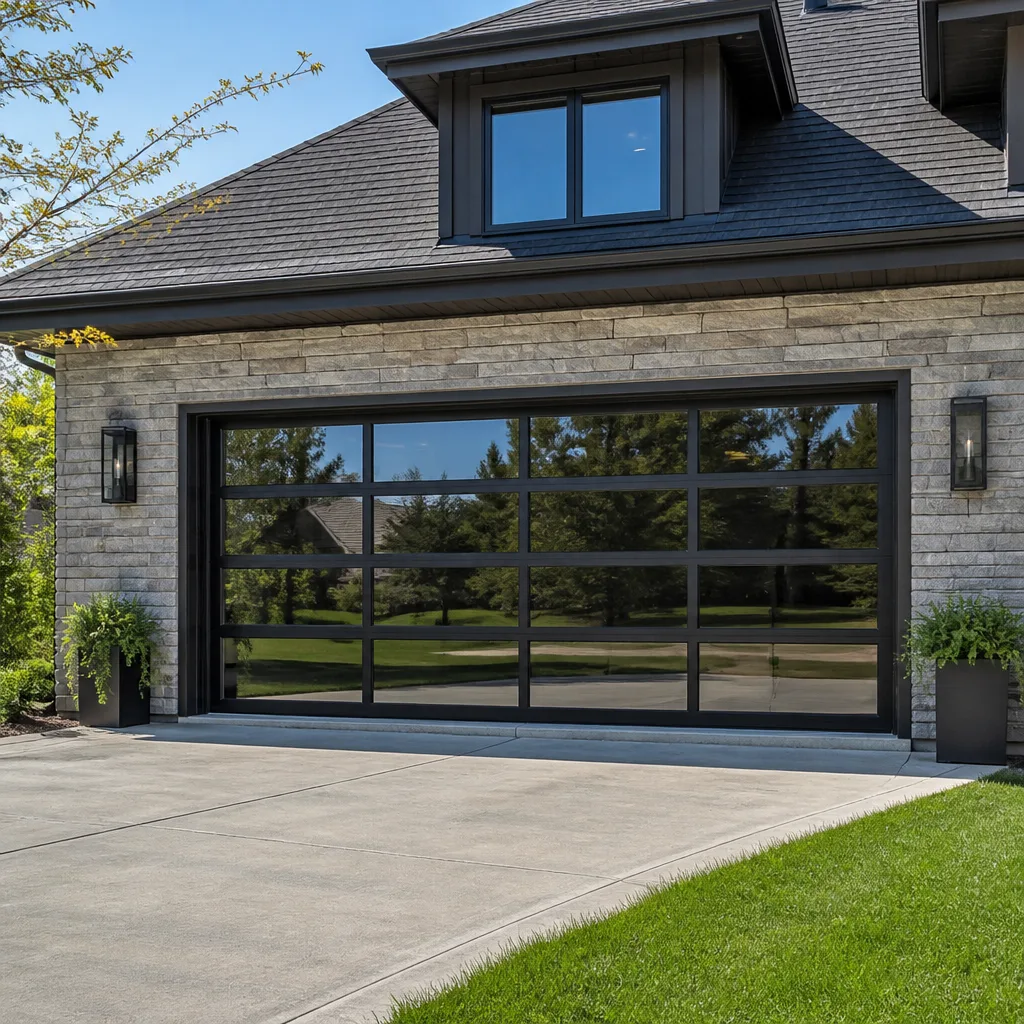 Full-view glass
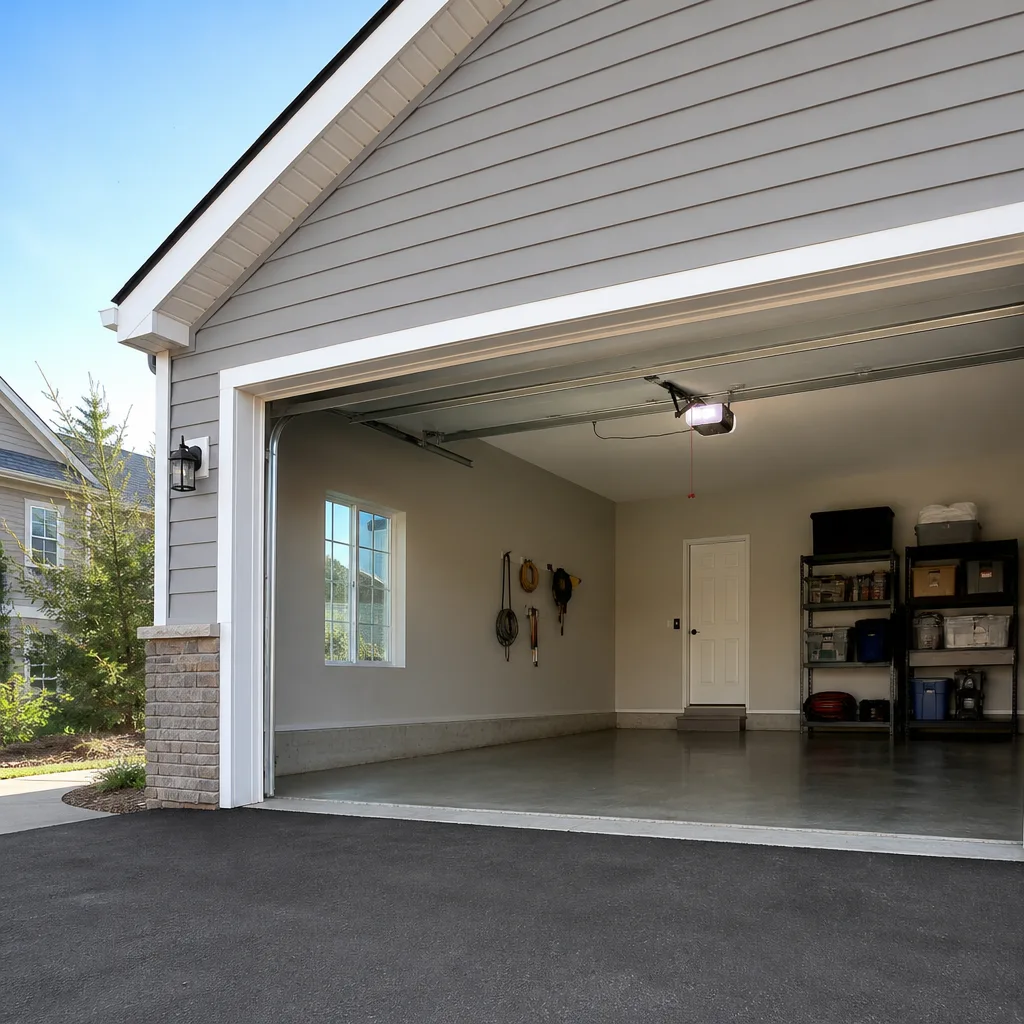 LiftMaster openers
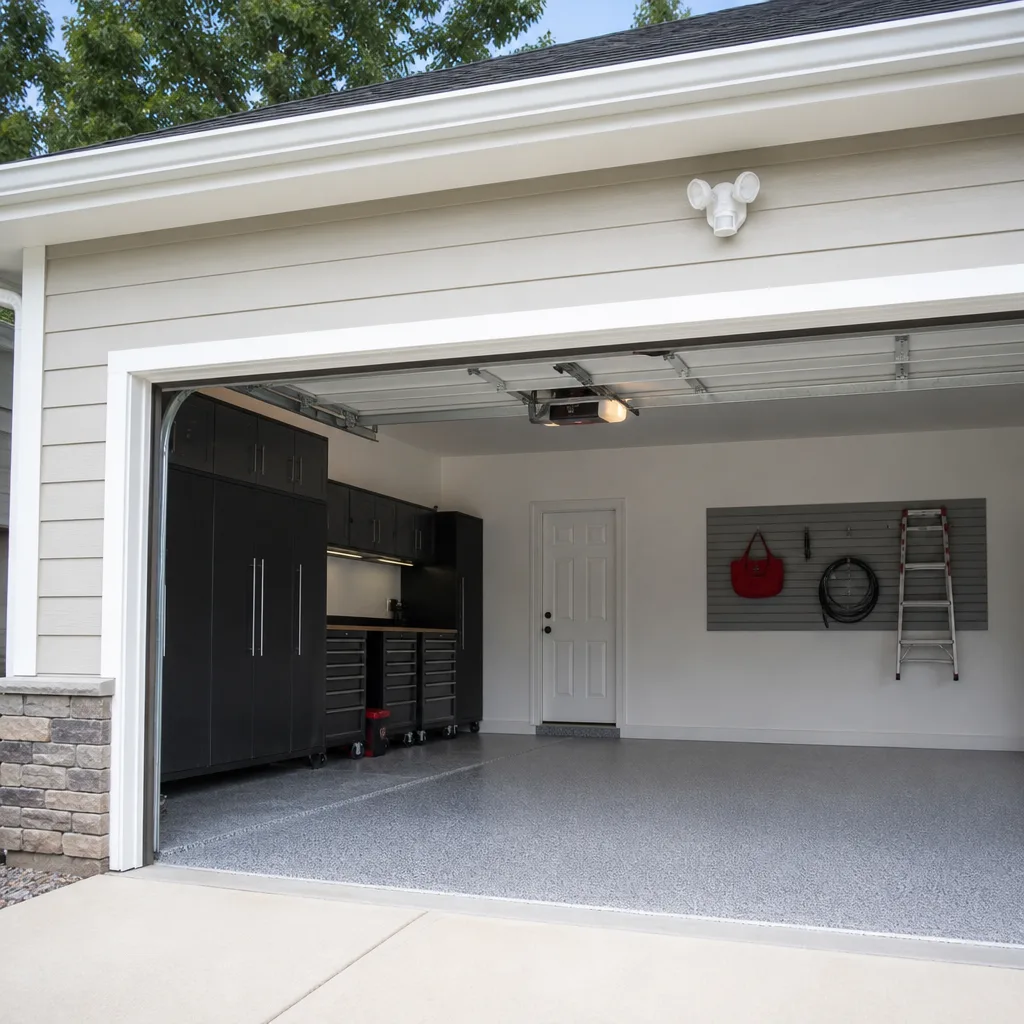 Chamberlain openers
Full 25-point door and opener safety check with every visit - springs, cables, rollers, tracks, and your LiftMaster or Chamberlain opener included
You get a price before we start. It does not change when the truck arrives.
Get your free estimateThe Complete Garage Door Repair Guide for Baldwin Park Homeowners
Here’s a number most garage door guides won’t tell you: the San Gabriel Valley’s summer heat cycles cause garage door springs to lose tension 30 to 40 percent faster than manufacturer estimates. That means a spring rated for 10,000 cycles in a coastal climate might give a Baldwin Park homeowner closer to 6,000 before it snaps. Most repair content online is written as if every garage in America sits in the same mild weather. Yours doesn’t. This guide walks through what actually breaks, what it costs in Baldwin Park, what you can safely handle yourself, and what needs a professional who knows the difference between a $40 fix and a $400 one.
Styles & brands we work with
- Raised-panel steel
- Carriage house
- Modern flush
- Full-view glass
- LiftMaster openers
- Chamberlain openers
Quick Answer
Garage door repair in Baldwin Park typically costs between $140 and $420 depending on what’s broken, with spring replacement, cable repair, and opener diagnostics being the three most common jobs we see. Most repairs take under two hours once parts are in hand, and the difference between a repair that lasts six months and one that lasts ten years almost always comes down to whether the technician addresses the underlying cause, not just the broken part. Call (866) 714-6304 for a free estimate, and the price is quoted and agreed before any work starts.
Table of Contents
- Why Baldwin Park’s Climate Wears Out Garage Doors Faster
- Part-by-Part Triage: What Each Symptom Means and What It Costs
- Garage Door Springs: The Part That Fails First
- Cables and Rollers: The Quiet Failures You Don’t Hear Coming
- Opener Problems: When the Door Is Fine but the Motor Isn’t
- Stucco Homes and Attached Garages: What Baldwin Park Construction Means for Repairs
- The $40 Fix vs. the 10-Year Fix: How to Ask the Right Question
- How to Verify a Baldwin Park Garage Door Contractor Before They Touch Your Door
- Common Mistakes to Avoid
- When to Call a Professional
- Frequently Asked Questions
- The Bottom Line
Why Baldwin Park’s Climate Wears Out Garage Doors Faster
Baldwin Park sits in the San Gabriel Valley, where summer temperatures routinely climb into the high 90s and sometimes past 100. That heat doesn’t just make your garage uncomfortable. It physically changes the metal components in your door system.
Torsion springs are the clearest example. These springs are calibrated to specific tension levels, and that calibration assumes a fairly stable environmental range. When the ambient temperature inside a Baldwin Park garage swings from 50 degrees on a winter morning to 110 degrees on a July afternoon, the metal expands and contracts. Each expansion cycle releases a small amount of tension. Over the course of one San Gabriel Valley summer, a spring that started at full tension can lose 10 to 15 percent of its lifting force. Over two or three summers, that adds up to a spring that’s working harder than it should, which shortens its lifespan measurably.
Dust is the second factor. Baldwin Park gets wind from the foothills, and that wind carries fine particulate dust. That dust settles on the rollers, hinges, and tracks. If the tracks aren’t cleaned, the rollers grind against that dust every time the door opens. We regularly see rollers in Baldwin Park garages that look like they’ve been sandblasted. A roller that would last 15 years in a coastal garage might wear out in 8 here, simply because of airborne grit.
Humidity swings matter too, especially for older doors with steel panels. A dry climate would preserve the metal. But Baldwin Park’s occasional Santa Ana-driven dryness followed by winter rains creates condensation cycles inside uninsulated garages. That’s when rust starts on hinge points and cable ends. None of this is catastrophic on its own, but together it means your garage door is aging faster than the manual suggests. A homeowner who knows this can catch wear before it becomes an emergency.
Part-by-Part Triage: What Each Symptom Means and What It Costs
Before you call anyone, you should be able to describe the problem precisely. It helps the technician bring the right parts and helps you understand whether the quote you’re getting is reasonable. Here’s what we see in Baldwin Park, part by part.
Symptom-to-part triage table:
- Door won’t open, and you hear a loud bang from the garage: The torsion spring snapped. This is the most common emergency call in Baldwin Park. Average cost: $180 to $340 per spring, including labor. Do not attempt to open the door manually. The spring under tension carries enough force to cause serious injury.
- Door opens a few inches, stops, and reverses: This is usually a sensor misalignment or an obstruction in the photo-eye path. Sometimes it’s a force-limit setting on the opener. Average cost: $120 to $180 if it’s a sensor or limit adjustment. If you can see the sensor lights blinking, you can often clean the lenses and clear the path yourself.
- Door is crooked or uneven when opening: One of the cables has likely slipped off the drum or frayed. Continuing to operate the door can bend the track. Average cost: $150 to $250 per cable. This is a professional repair. Cable replacement involves releasing spring tension, and the tension in an active spring makes this genuinely dangerous.
- Grinding or screeching noise when the door moves: Worn rollers or dry bearings. If the rollers are nylon, they may be cracked. If steel, they may be seized. Average cost: $100 to $180 for a full roller replacement on a standard two-car door. Lubrication alone is not a fix once the roller is damaged.
- Door moves but is noisy, slow, or sagging on one side: Hinges or track brackets may be loose, or the track itself has shifted. Homes with stucco exteriors sometimes have track brackets that were never properly anchored. Average cost: $130 to $200 for hinge replacement and track realignment.
- Opener runs but the door doesn’t move: The trolley carriage or drive gear is stripped. On chain-drive openers from LiftMaster or Chamberlain, the plastic drive gear is designed to fail as a sacrificial part. Average cost: $150 to $250 for a drive gear replacement.
- Remote works intermittently, or the wall button works but the remote doesn’t: This is almost never the opener motor. It’s usually the remote battery, a failing capacitor on the logic board, or RF interference from a nearby device. Average cost: $90 to $200 depending on whether it’s a remote replacement or a logic board diagnosis.
These prices reflect what we see for the Baldwin Park market specifically. Your exact quote will depend on the door’s size, weight, and brand, but this gives you a realistic picture before you talk to a contractor. You should get a written price before work begins, every time.
Garage Door Springs: The Part That Fails First
If you take one thing from this whole guide, let it be this: springs are not a DIY repair. We say that not to protect trade secrets but because torsion spring injuries are among the worst we’ve heard of, and we’ve heard of them far too often in the San Gabriel Valley. A torsion spring under full tension carries enough stored energy to break bone. When a homeowner without the right winding bars tries to adjust one, the result can be catastrophic.
Springs fail for two reasons in Baldwin Park: metal fatigue from the temperature cycling described earlier, and cycle count. Every time your door opens and closes, that’s one cycle. Standard springs are rated for 10,000 cycles. Many homes in Baldwin Park are 30 to 50 years old, and if the springs have never been replaced, they’re not “worn out” – they’re overdue. We’ve seen spring failures in homes where the homeowners had no idea the springs were original to the 1980s construction.
Here’s how to know your spring is failing before it snaps:
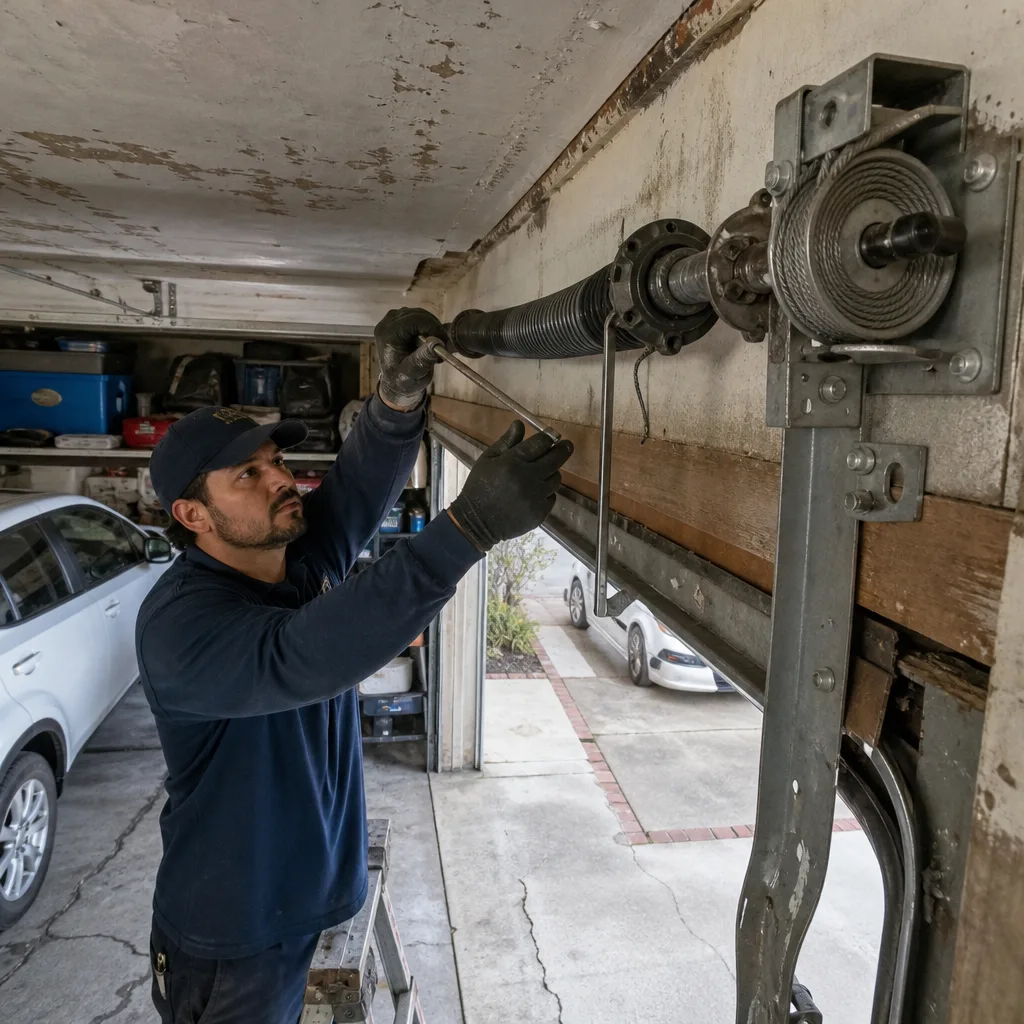
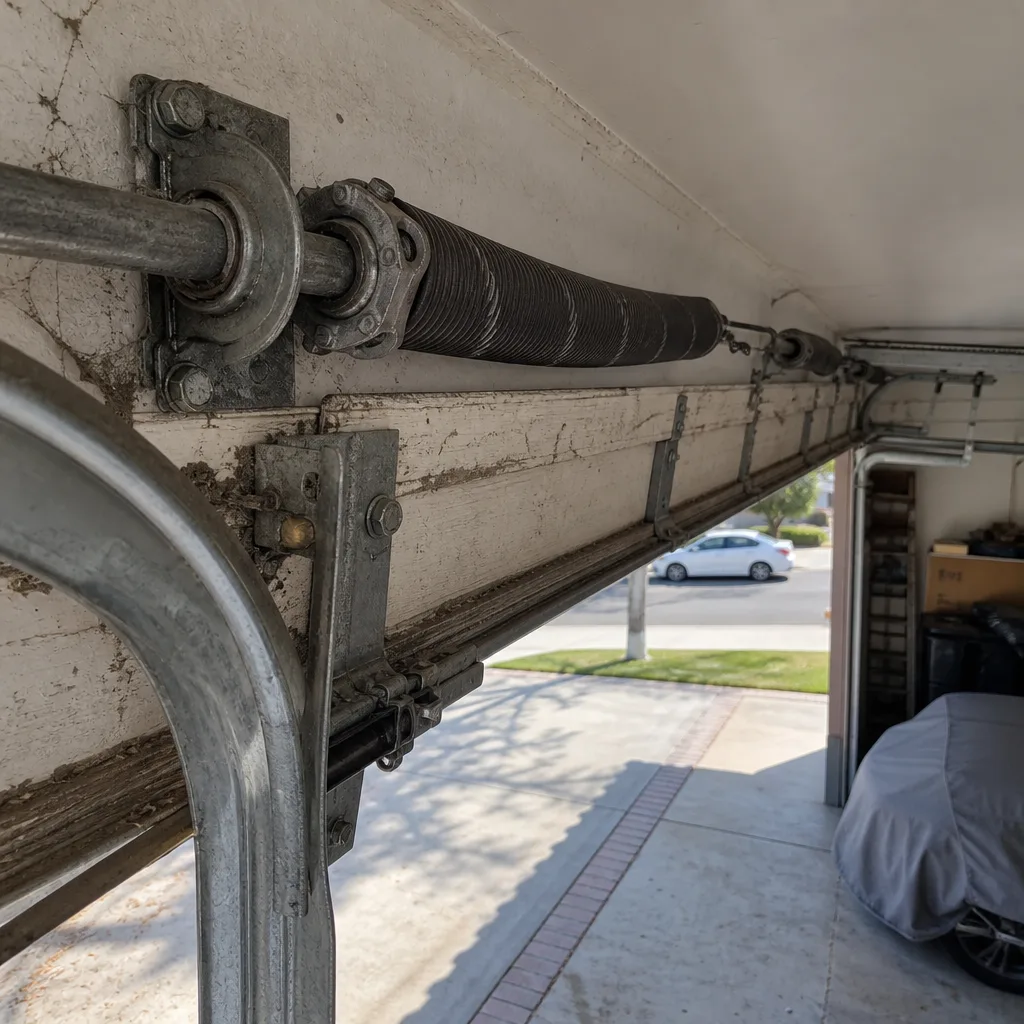
- Look at the spring itself. If you see a visible gap in the coil, like a stretched Slinky, the spring has already lost tension. A healthy torsion spring has coils that sit tight together.
- Test the balance. With the opener disengaged, lift the door manually to about waist height. If it drops or feels heavy, the spring isn’t doing its job. If it stays put and moves easily, the spring is balanced.
- Listen for a “ka-chunk” sound. A spring that binds and releases mid-cycle is showing fatigue and should be checked soon.
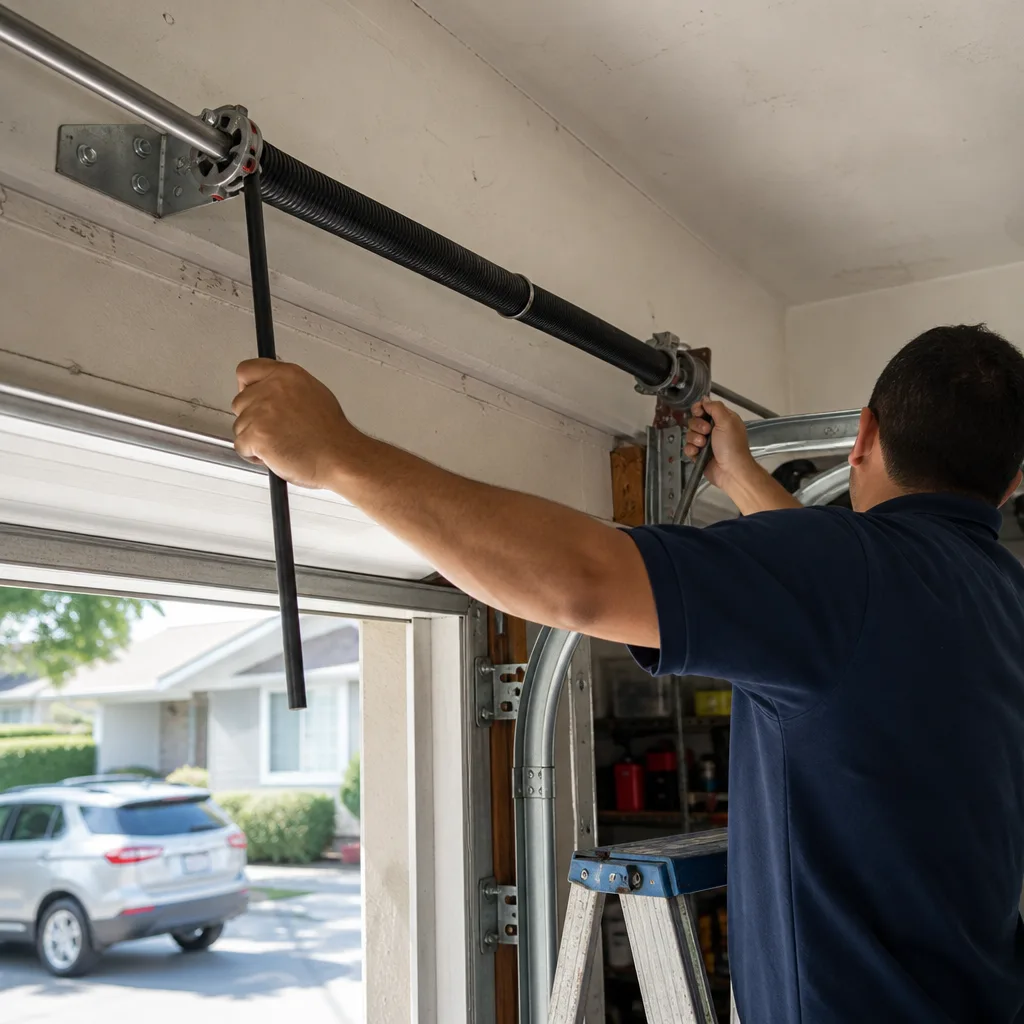
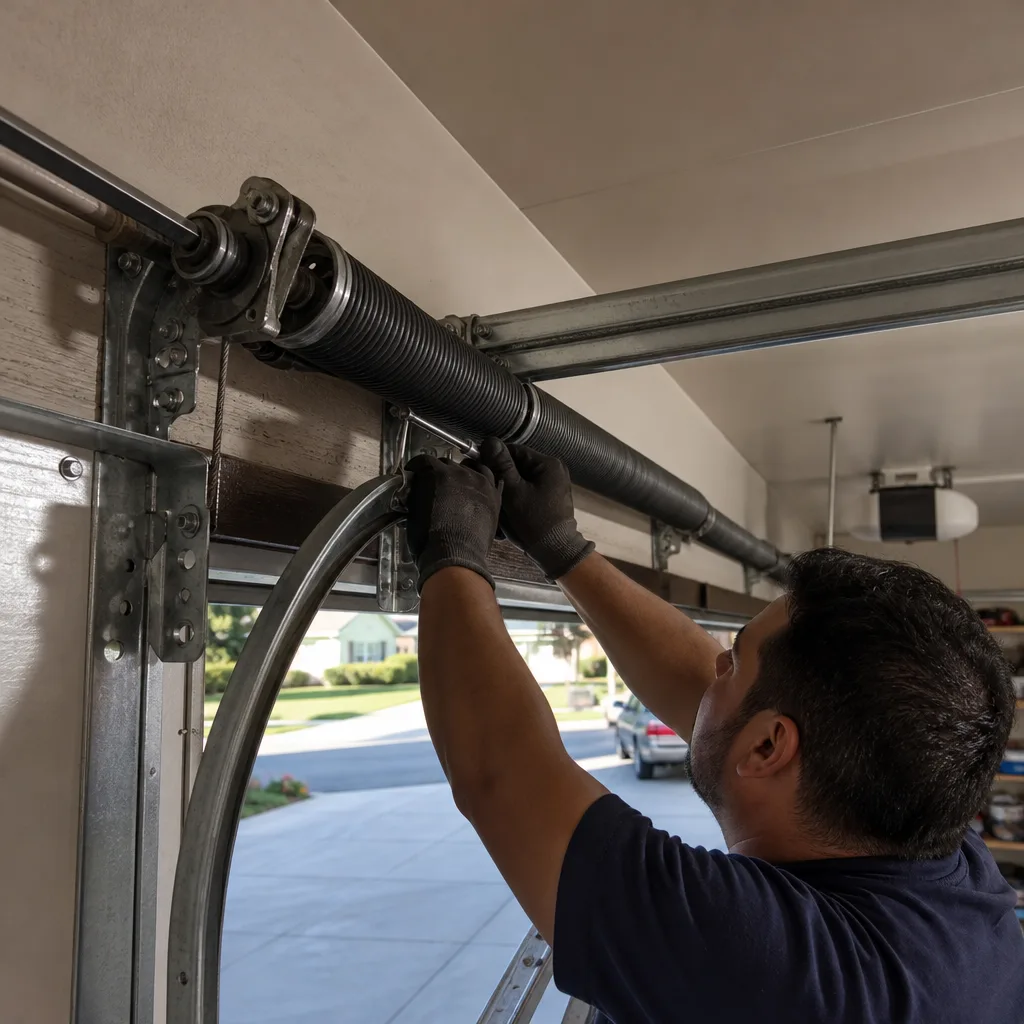
When a spring does break, you’ll hear it. The loud bang many people describe as a “gunshot” or “something fell on the roof” is the telltale sign. At that point, do not try to lift the door. The door will be extremely heavy, and the remaining cable can snap if you force it. Call a professional. We work on springs from every major door brand in the area, and on an emergency spring replacement in Baldwin Park, the process is straightforward: release any remaining tension safely, remove the old springs, install new ones matched to the door’s weight, and rebalance. The price is confirmed before the work begins, so you’re not negotiating mid-repair.
Cables and Rollers: The Quiet Failures You Don’t Hear Coming
Springs announce their failure with a bang. Cables don’t. They fray strand by strand. Rollers don’t throw a visible error code. They just get louder and grittier until they seize. This is why we tell Baldwin Park homeowners that the most expensive repair is often the one nobody noticed for six months.
Lifting cables run along both sides of the door from the bottom bracket to the drum at the top. They carry the door’s weight when the spring releases tension. If a cable frays, it loses thickness strand by strand, and each remaining strand carries more load. Eventually it snaps. When that happens, the door can lurch sideways, pulling the track out of alignment and sometimes bending the door panel itself. A snapped cable often turns a $200 cable replacement into a $600 track-and-panel repair because the door was operated after the failure.
What to look for in your garage this month:
- Frayed strands near the bottom bracket: Look for thin wire threads that have separated from the main cable. Any visible fraying means replacement is urgent.
- Rust at the cable end: The loop where the cable attaches to the bottom bracket is a common corrosion point. In Baldwin Park’s humidity cycles, this area stays damp longer than other components.
- Door that’s a half-inch lower on one side: That’s a cable that’s slipping on the drum, not a door that’s just “settling.”
Rollers wear differently depending on material. Nylon rollers with ball bearings run quietly and last longest, but the bearing seals can fail. Steel rollers last forever in a dry environment but rust and grind in Baldwin Park’s humidity swings. If you hear a sound like someone dragging a file across metal, your rollers are done. Roller replacement is one of the more affordable repairs we do, but doing it well requires removing each hinge bracket under controlled conditions, and when rollers fail completely, they can chew into the track itself.
We carry a range of roller and cable types suited to specific door brands, including Clopay and Amarr, so the parts usually match what’s already installed rather than a generic substitute.
Opener Problems: When the Door Is Fine but the Motor Isn’t
About a third of the calls we take in Baldwin Park aren’t door problems at all. They’re opener problems. The door, springs, and cables are fine, but the motor won’t engage, the remote won’t respond, or the opener runs without moving the door. These are two different failures with two different fixes, and a misdiagnosis is frustrating for everyone.
If the opener motor hums but the door doesn’t move, the trolley carriage or drive gear is the usual suspect. On chain- and belt-drive openers from LiftMaster, Chamberlain, and Craftsman, the drive gear inside the unit is plastic by design. It’s meant to strip before the motor burns out. That’s a good design, but the gear does wear out, especially on older openers that have never been serviced. The fix is a new gear assembly, and it takes under an hour when the technician has the correct gear for the brand. On Genie screw-drive openers, the equivalent failure is often the carriage itself or the screw rail joints.
If the opener doesn’t respond at all, the problem is usually electrical: a dead wall-button capacitor, a failed logic board, or a bad safety-sensor connection. These are opener-specific diagnoses, not door repairs. The technician needs to understand the manufacturer’s logic-board behavior to know whether a flashing LED means “sensor obstruction” or “board fault.” This is where brand-specific knowledge actually matters. A Chamberlain logic board and a Genie logic board report failures differently, and troubleshooting by guesswork means replacing good parts.
For Baldwin Park homeowners with smart-home-enabled openers, our garage door opener repair service covers the full range of motor, remote, wall-control, and Wi-Fi integration issues. Your LiftMaster opener, diagnosed by someone who knows it cold, gets fixed to spec, not just fixed. There’s no need to separate the opener from the door as if they’re two contractors’ problems. It’s one system, and one call covers it.
For the rest of this guide, if you’re dealing specifically with motor-side issues rather than the door hardware, start with the opener repair page for a more focused walkthrough.
Stucco Homes and Attached Garages: What Baldwin Park Construction Means for Repairs
Baldwin Park’s housing stock skews toward stucco exteriors and attached garages, and that construction style quietly shapes how garage door repairs go. If you’ve ever wondered why a technician started talking about your wall before they touched your door, this is why.
Stucco is a rigid material. When track brackets are anchored through stucco into the framing, the anchor point has to be done correctly. If the original installation was done without proper anchors, or if the stucco has since cracked and let moisture reach the anchor, the bracket can loosen. A loose bracket means the track flexes under load, which wears rollers unevenly and eventually pulls the door out of alignment. In attached garages, this matters more because the garage door is typically the largest moving object in the home, and the track system is relying on walls that are also part of the living structure.
We regularly see a specific pattern in Baldwin Park: a door that’s been “repaired” twice for the same symptom because the track was never properly resecured to the stucco wall. The symptom is always the same: door sags, hinge squeaks, repair lasts a month, repeat. The underlying cause is the bracket, not the door. A repair that ignores the bracket doesn’t solve the problem. When our technicians replace the anchors, the door runs straight and quiet, and the symptom stays gone.
Attached garages also mean that your garage door is directly connected to your house. A door that binds can vibrate the wall, and an unbalanced door puts lateral load on the track that transfers into the frame. None of this is an emergency, but it’s a reason to treat garage door repair as a house maintenance item, not a separate, low-priority one. If your bedroom shares a wall with the garage, you already know how loud a misaligned door can be.
The $40 Fix vs. the 10-Year Fix: How to Ask the Right Question
Here’s the single most important question you can ask any garage door contractor in Baldwin Park: “Is this repair addressing the cause or just replacing the broken part?” Because a lot of the time, the broken part is a symptom. And if the symptom is all that gets fixed, you’ll be paying for the same repair again next year.
That’s the difference between a repair that buys six months and a repair that solves the problem for 10 years. A broken spring gets replaced. But if the door was unbalanced, the new spring will wear out fast too. A snapped cable gets replaced. But if the corner bracket is rusted, the new cable will fail at the same place. A stripped drive gear gets replaced. But if the opener’s force limits are set too high because the door was fighting a bad spring, the new gear will strip again.
When we diagnose a garage door in Baldwin Park, we check the whole system: spring balance, cable condition at both ends, roller wear, track alignment, hinge play, and opener force settings. That’s how you find the underlying cause. When the customer chooses a repair that only addresses the broken part, we’ll do that work and tell them what we found. When they choose the full fix, they get a door that runs quietly and stays reliable for years.
How to ask the right question in three steps:
- Ask what caused the failure. A good technician can explain it simply. “Your spring snapped because it was 11 years old and the left cable had been carrying extra load.” If the answer is “things just break,” ask for more.
- Ask what’s included. A real quote lists parts and labor, and it specifies whether the technician will check the balance and force settings after the part is replaced. If the quote is vague, the repair might be too.
- Ask what would happen if you only fixed the broken part. An honest answer tells you the risk. Sometimes the partial fix is the right decision, but it should be an informed one.
We’d rather give you the full picture and let you decide than pretend a partial fix is a complete fix. For the complete lifecycle of your garage door, from emergency hardware repair to Baldwin Park garage door repair work to a brand-new garage door installation, one name covers it. The last garage door company you’ll need to call.
How to Verify a Baldwin Park Garage Door Contractor Before They Touch Your Door
Baldwin Park has no shortage of garage door repair outfits, and the quality ranges from skilled technicians to people who picked up a toolkit last week. Before you let anyone touch your door, do these five things. They take 15 minutes and they save you from the worst-case scenarios: an unsafe repair, an invoice that’s double the quote, or a door that fails a month later with no one returning your calls.
- Look up the license. Any contractor doing garage door work in California needs a CSLB license. Check the Contractors State License Board website for the name, the license status, and any complaints. This is public information. Use it.
- Ask what brands they service. A company that says “all brands” is probably fine, but one that names the specific brands, LiftMaster, Chamberlain, Genie, Clopay, Amarr, Wayne Dalton, Craftsman, Raynor, and can tell you how a Clopay door differs from a Wayne Dalton in its track profile, that’s a company with actual depth. We work on the brand you have, not the brand we prefer.
- Get the quote in writing before work begins. A written quote with a parts list and labor line protects you. Any technician who won’t put a number in writing is not someone you want inside your garage.
- Ask about the diagnosis, not just the part. The technician should be able to explain what failed and why. A one-word answer like “spring” or “cable” isn’t a diagnosis.
- Check whether the company does opener work as a separate service. Opener repair is a distinct specialty. If the company treats the opener as an afterthought to door repairs, they may not have the diagnostic depth for motor, remote, and smart-home integration issues. Our opener repair service is a dedicated discipline, not an add-on.
A little verification goes a long way in Baldwin Park. We encourage every homeowner to do it, whether they call us or not.
Common Mistakes to Avoid
- Ignoring a noisy door. A door that grinds or squeals is telling you something specific. Waiting until it fails turns a $150 roller replacement into a $500 track repair. In Baldwin Park’s dusty conditions, noise is an early warning you should not skip.
- Lubricating a worn-out roller. Grease on a cracked or seized roller doesn’t fix it. It just hides the sound for a few weeks while the roller keeps wearing into the track. Replace the roller, don’t oil it.
- Operating the door after a spring breaks. The opener can’t lift a door with a broken spring, and forcing the issue often snaps the cable or bends the track. When you hear the bang, stop using the door.
- Hiring on price alone. The cheapest bid in Baldwin Park is often the one that replaces only the broken part without checking the cause. You’ll pay again when the same symptom returns.
- Assuming the door is the problem when the opener won’t respond. Many opener failures are electrical or logic-board issues, not the motor or the door. A door replacement won’t fix a bad opener board.
- Skipping the balance check. A door that feels heavy when you lift it manually is a spring problem, even if the opener still opens the door. The opener is just working harder than it should, and it will fail sooner.
When to Call a Professional
Some garage door work is genuinely unsafe for a homeowner to attempt. Torsion spring replacement, cable work under tension, and any repair that requires releasing and re-tensioning the spring system should always be handled by a trained professional with the right tools. The stored energy in a wound spring is enough to cause serious injury, and cable failures under load can whip unpredictably. If your door is off its tracks, if a spring is broken, or if the door is binding and you can’t see why, don’t experiment. Call someone who does this every day. Foxwood Garage Door Repair offers free estimates in Baldwin Park – call (866) 714-6304 and we’ll diagnose the problem and give you a written price before any work begins.
Frequently Asked Questions
Most garage door repairs in Baldwin Park run between $140 and $420, depending on the failed part. A simple sensor realignment is on the low end. A torsion spring replacement, which is the most common repair we do, typically falls between $180 and $340 per spring including labor. Cable replacement, roller replacement, and drive-gear repairs fall in the middle of that range. Get a written quote before work starts, and you’ll know your number before the technician lifts a tool. Call (866) 714-6304 for a free estimate.
No. Torsion springs operate under extreme tension and can cause serious injury if mishandled, which is why spring replacement is consistently the most dangerous DIY job in residential repair. The winding bars needed to adjust a spring are specialized tools, and a mistake in the winding sequence can be catastrophic. This is one repair where the professional fee is cheap insurance.
Standard torsion springs are rated for about 10,000 open-and-close cycles, which usually translates to 7 to 10 years of normal use, but Baldwin Park’s summer heat cycles shorten that lifespan meaningfully. Many springs in this area fail in 5 to 7 years, especially on west-facing garages that absorb afternoon sun. High-cycle springs rated for 20,000 cycles or more are worth considering here.
We service all major residential garage door and opener brands, including LiftMaster, Chamberlain, Genie, and Clopay, along with Amarr, Wayne Dalton, Craftsman, and Raynor. That multi-brand depth means the diagnostics are specific to each manufacturer’s design, not a generic approach applied to every door. We work on the brand you have, not the brand we prefer.
Yes, opener repair is a dedicated service for us, not an afterthought. That covers motor units, wall controls, remotes, and smart Wi-Fi-enabled systems across top brands. Whether it’s a stripped drive gear on a Chamberlain or a logic-board fault on a Genie, we treat the opener as its own specialty. For details, see our opener repair page.
We quote a price after we’ve diagnosed the door, and we write that number down before any work begins. The diagnosis is free. You agree to the repair at the quoted price, and the price doesn’t change unless you approve additional work after we find something unexpected. No surprise invoice at the end.
The Bottom Line
Your garage door is the largest moving part in your Baldwin Park home, and it’s under more stress here than in most of Southern California. Heat shortens spring life. Dust accelerates roller and hinge wear. Stucco construction demands proper track anchoring. The good news is that all of this is manageable when you know what to look for and when to call. Listen for new noises. Check your spring for gaps and your cables for fraying. Ask any contractor what caused the failure, not just what part broke. And when you need a diagnosis from someone who knows your door’s brand cold, call Foxwood Garage Door Repair at (866) 714-6304. Free estimates, written prices, and a repair that addresses the cause. The last garage door company you’ll need to call.
Written by the team at Foxwood Garage Door Repair, serving Baldwin Park since 2015.
See the difference
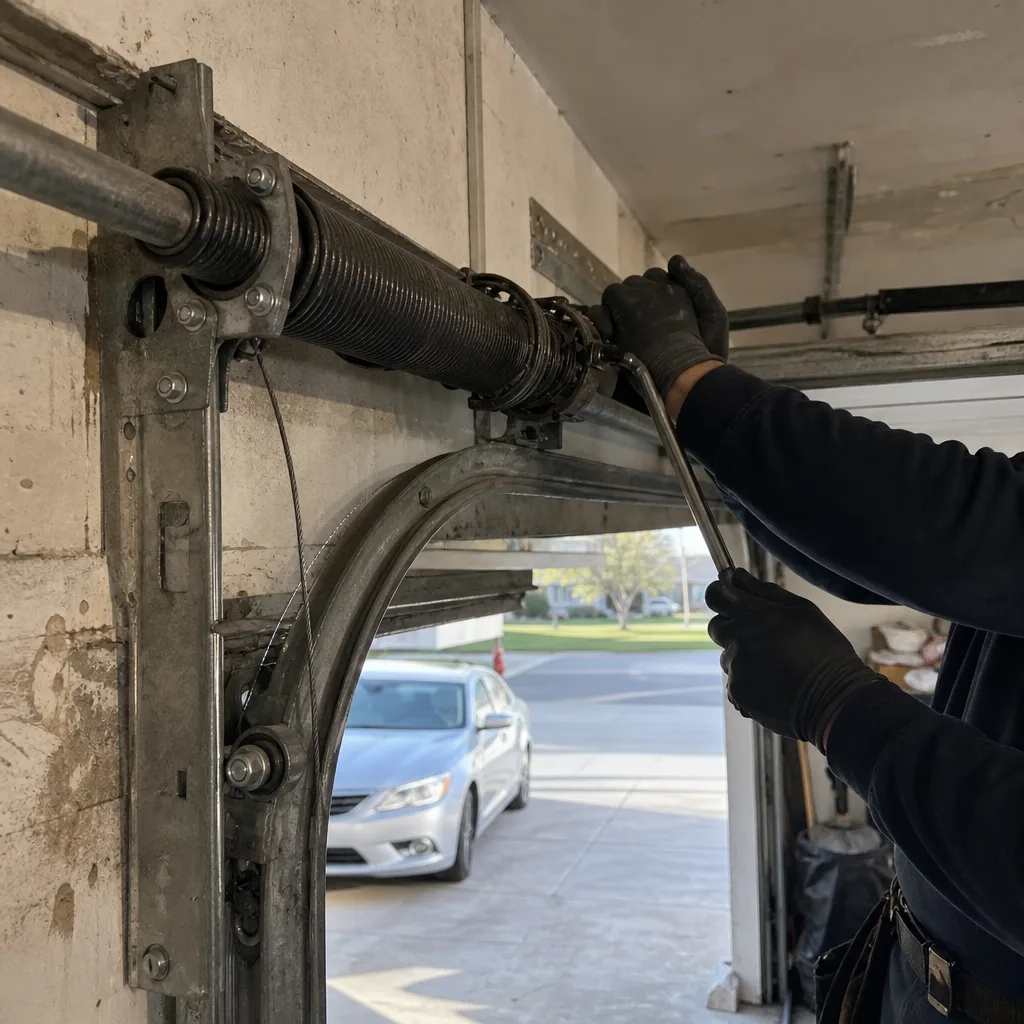 Before
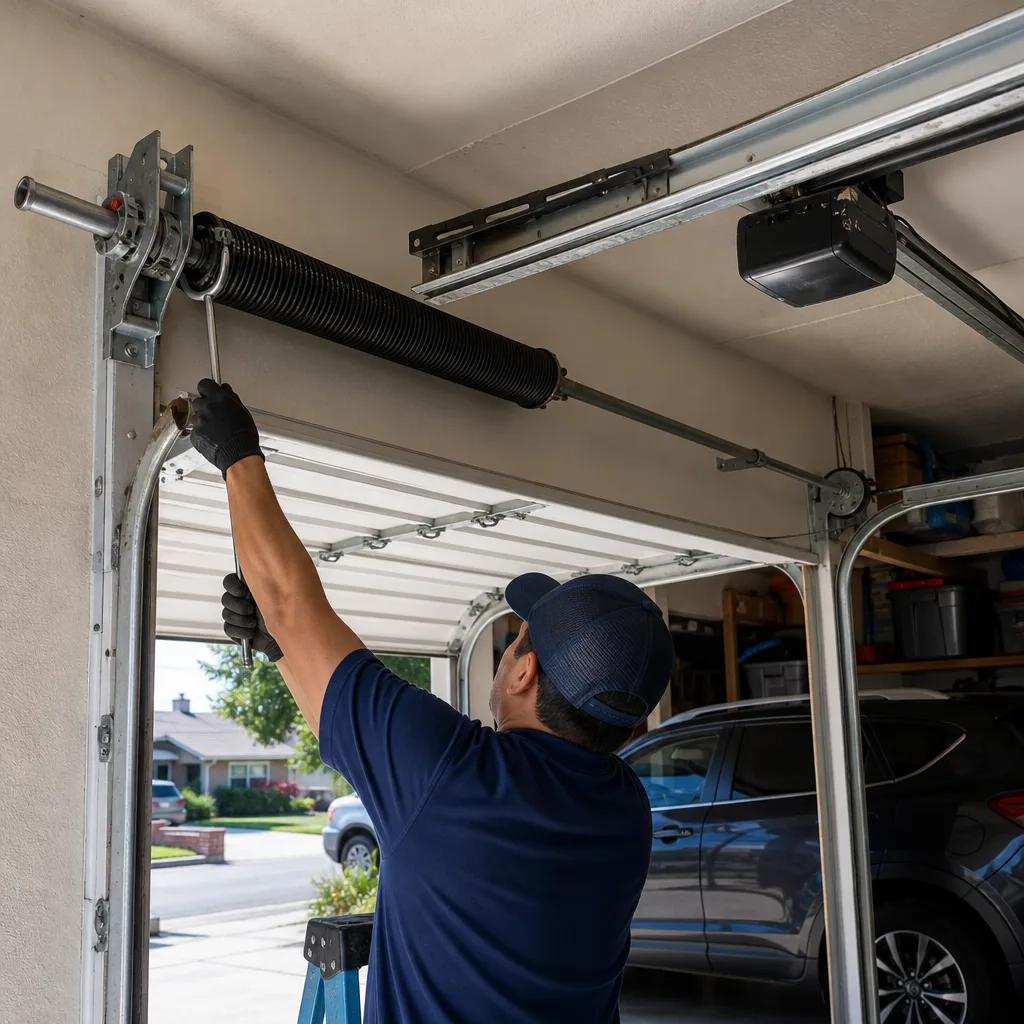 After
 Before
 After
 Before
 After