
Last updated November 2, 2026
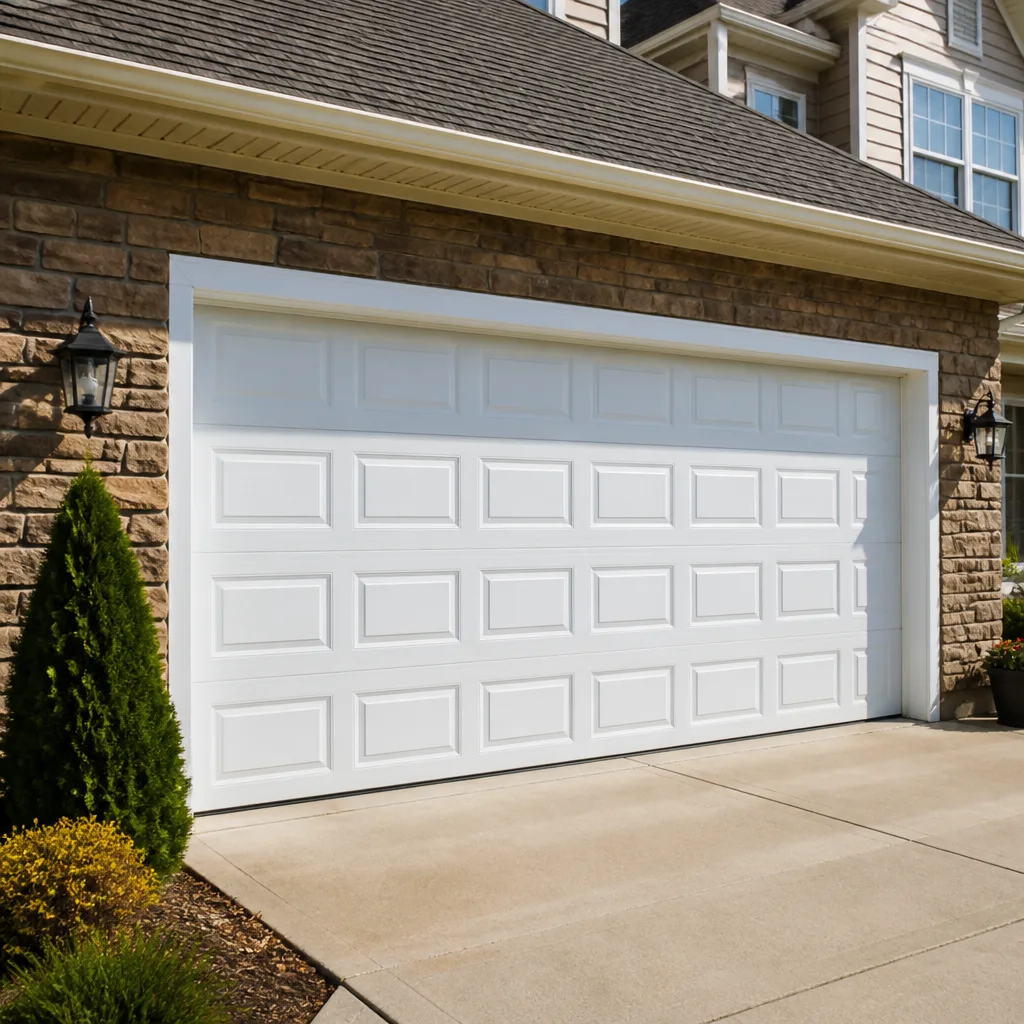 Raised-panel steel
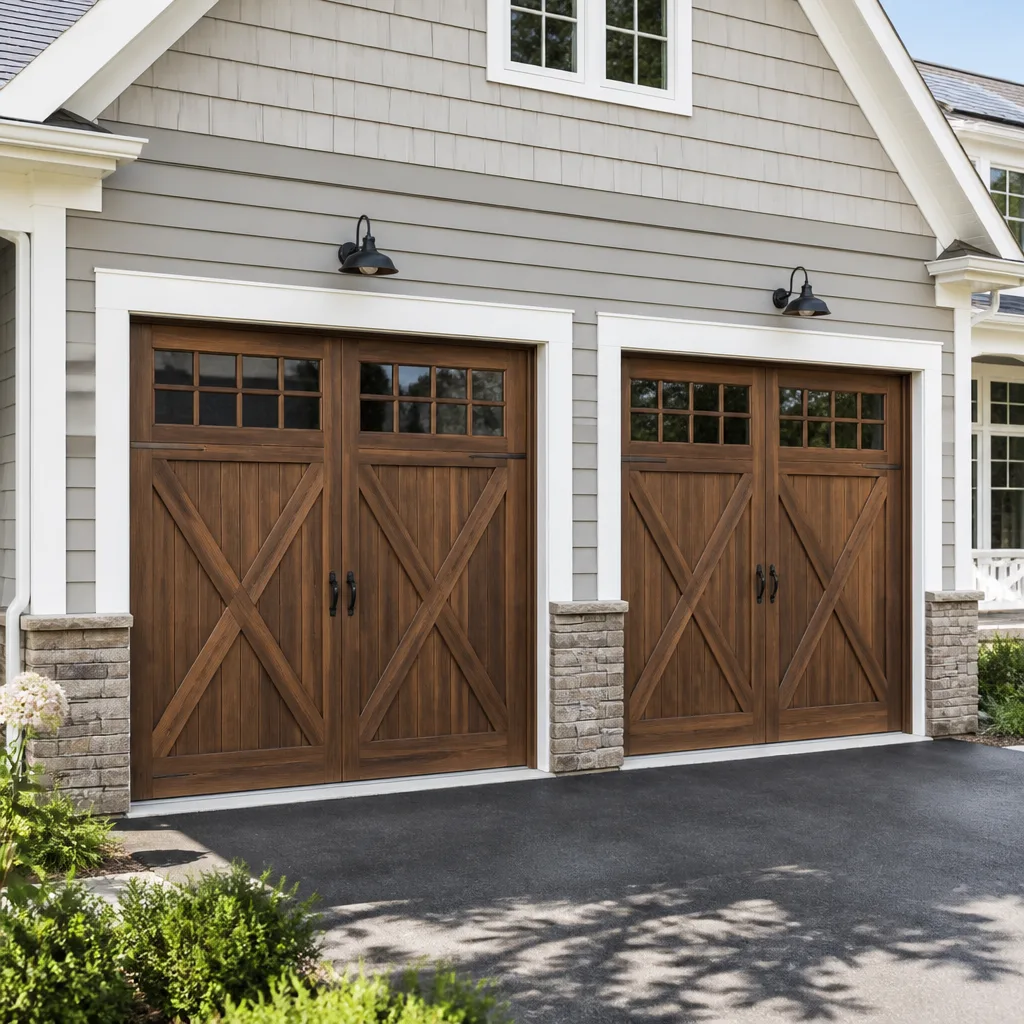 Carriage house
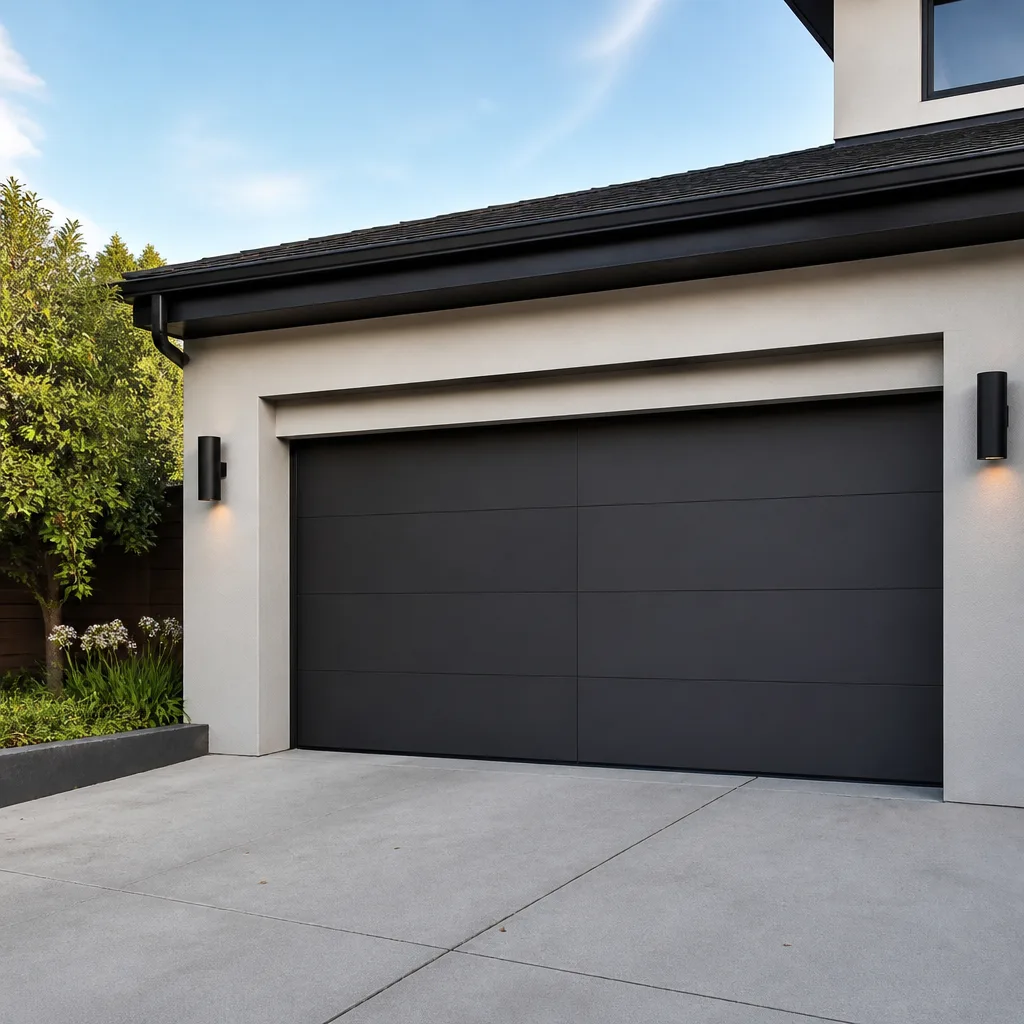 Modern flush
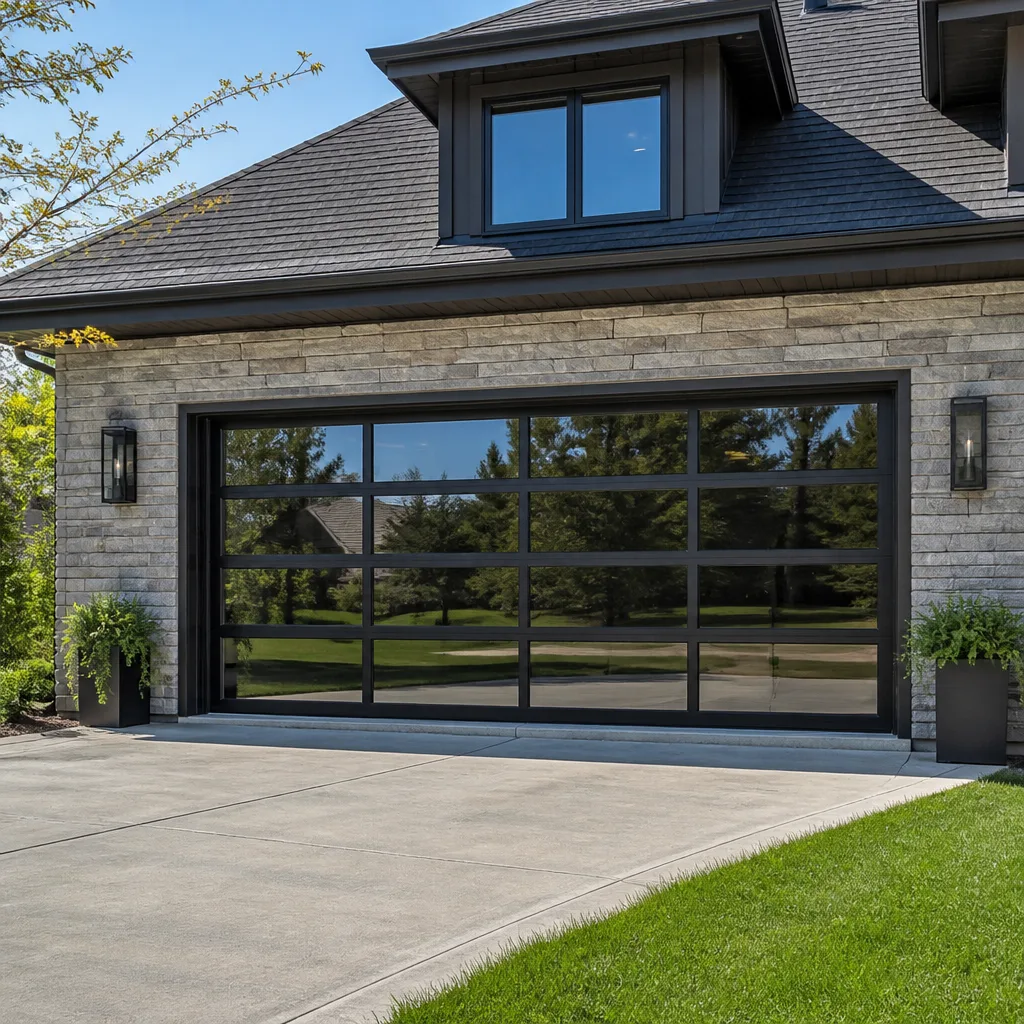 Full-view glass
 LiftMaster openers
 Chamberlain openers
Full 25-point door and opener safety check with every visit - springs, cables, rollers, tracks, and your LiftMaster or Chamberlain opener included
You get a price before we start. It does not change when the truck arrives.
Get your free estimateDIY vs Professional Garage Door: The Baldwin Park Homeowner’s Decision Guide
Here’s a number that should stop you cold: a torsion spring on a standard two-car garage door holds roughly 150 pounds of torque per side even when the door is closed and resting. When that spring snaps during a DIY attempt, it releases that energy in under a tenth of a second. In Baldwin Park, where attached garages on homes off Ramona Boulevard and the neighborhoods near Barnes Park are common, the question isn’t whether you’re handy. It’s whether you can correctly identify which garage door tasks are maintenance and which are mechanical work with real injury potential. This guide walks through both lists, the honest cost math, and where the line actually sits.
Quick Answer
DIY is genuinely appropriate for roughly 30 percent of garage door work: weatherstripping replacement, track cleaning, sensor realignment, remote programming, and basic lubrication. It is not appropriate for torsion spring replacement, cable work, or header bracket repair, where the injury risk and the cost of a botched repair outweigh any savings. In Baldwin Park, most professional companies including our team at Foxwood Garage Door Repair charge a flat diagnostic fee that gets waived if you proceed with the repair, so getting a professional opinion is rarely a money-losing move.
Styles & brands we work with
- Raised-panel steel
- Carriage house
- Modern flush
- Full-view glass
- LiftMaster openers
- Chamberlain openers
Table of Contents
- The Task Split: What’s Yours and What’s Not
- Torsion Springs: The Hard Stop in Any DIY Conversation
- California Liability: What Your Homeowner’s Policy Actually Covers
- The Honest Cost Math: DIY Savings vs. Professional Warranty
- What’s Actually in a DIY Garage Door Kit
- The Middle Path: Buying Your Own Parts
- Baldwin Park Specifics: Climate, Codes, and Local Market Reality
- Common Mistakes to Avoid
The Task Split: What’s Yours and What’s Not
Garage door work breaks into two categories, and the dividing line is not about skill. It’s about stored energy and load-bearing hardware. If a task requires you to touch components under tension, you’re no longer doing maintenance. You’re doing mechanical repair.
Safe for homeowners:
- Weatherstripping replacement along the bottom and sides of the door
- Cleaning and wiping down tracks with a dry cloth
- Realigning photo-eye sensors that have been bumped out of position
- Reprogramming remotes and keypads using the manufacturer’s button sequence
- Applying white lithium grease to rollers and hinges
- Tightening visible bolts and screws on non-tension brackets
These tasks require a ladder, basic hand tools, and about an hour. They’re also the tasks that make up most “garage door maintenance” content you’ll find online. In our experience at Foxwood Garage Door Repair in Baldwin Park, we’d estimate that half of service calls we field involve one of these six items.
Not safe for homeowners:
- Torsion spring replacement or adjustment
- Extension spring replacement on older Baldwin Park homes
- Cable re-threading or cable drum resetting
- Header bracket or center bearing plate work
- Opener motor replacement on units with integrated smart-home wiring
The spring and cable items all involve load-bearing components under high tension. The tooling required, particularly winding bars for torsion springs, is specific to the diameter of the spring. Using the wrong diameter bar is how a spring slips during winding and releases into your hands or face.
Torsion Springs: The Hard Stop in Any DIY Conversation
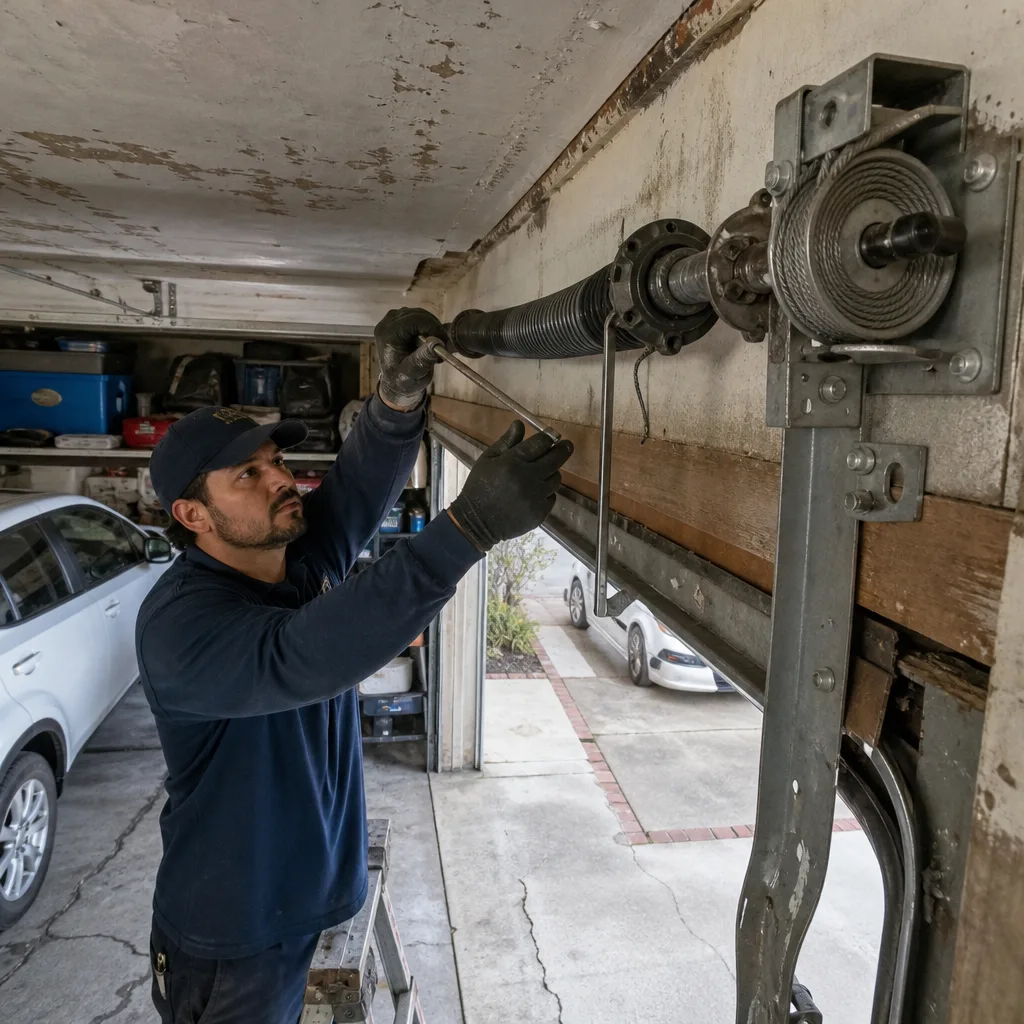
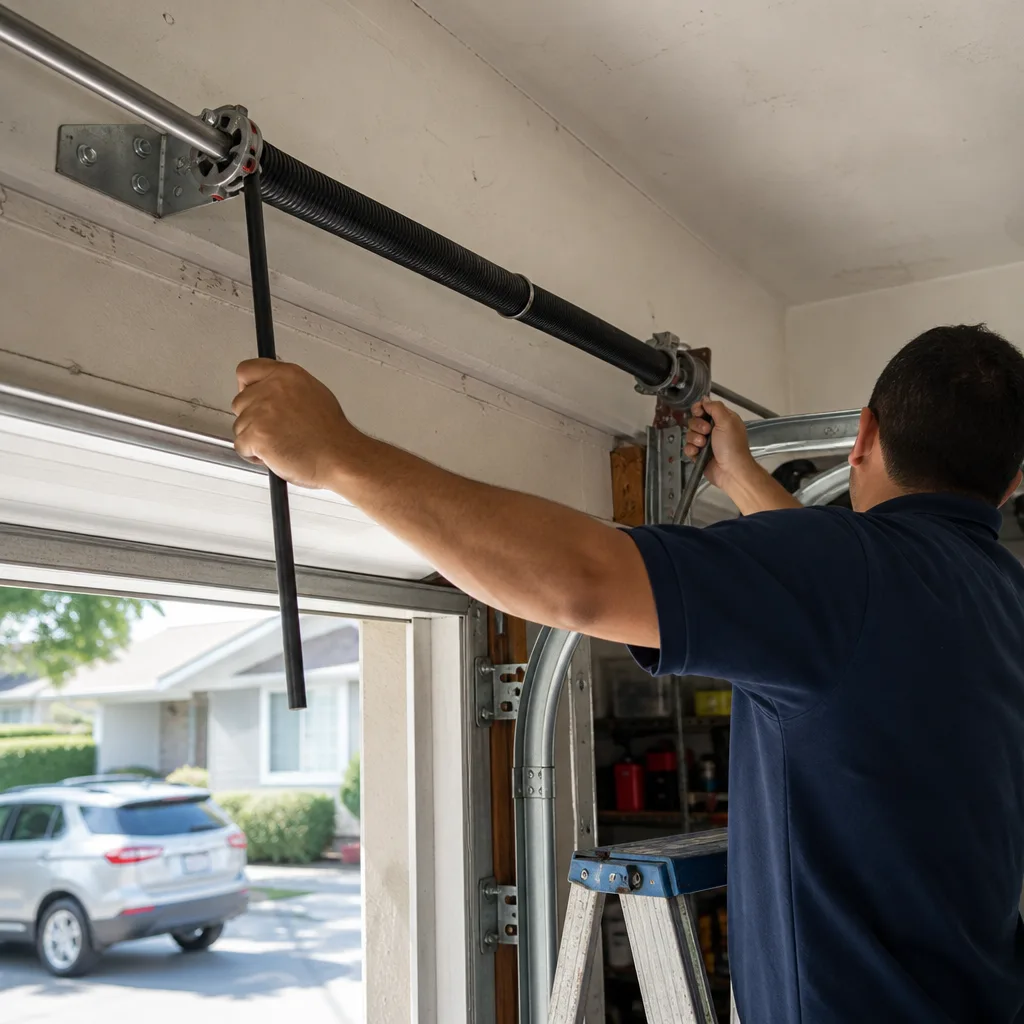
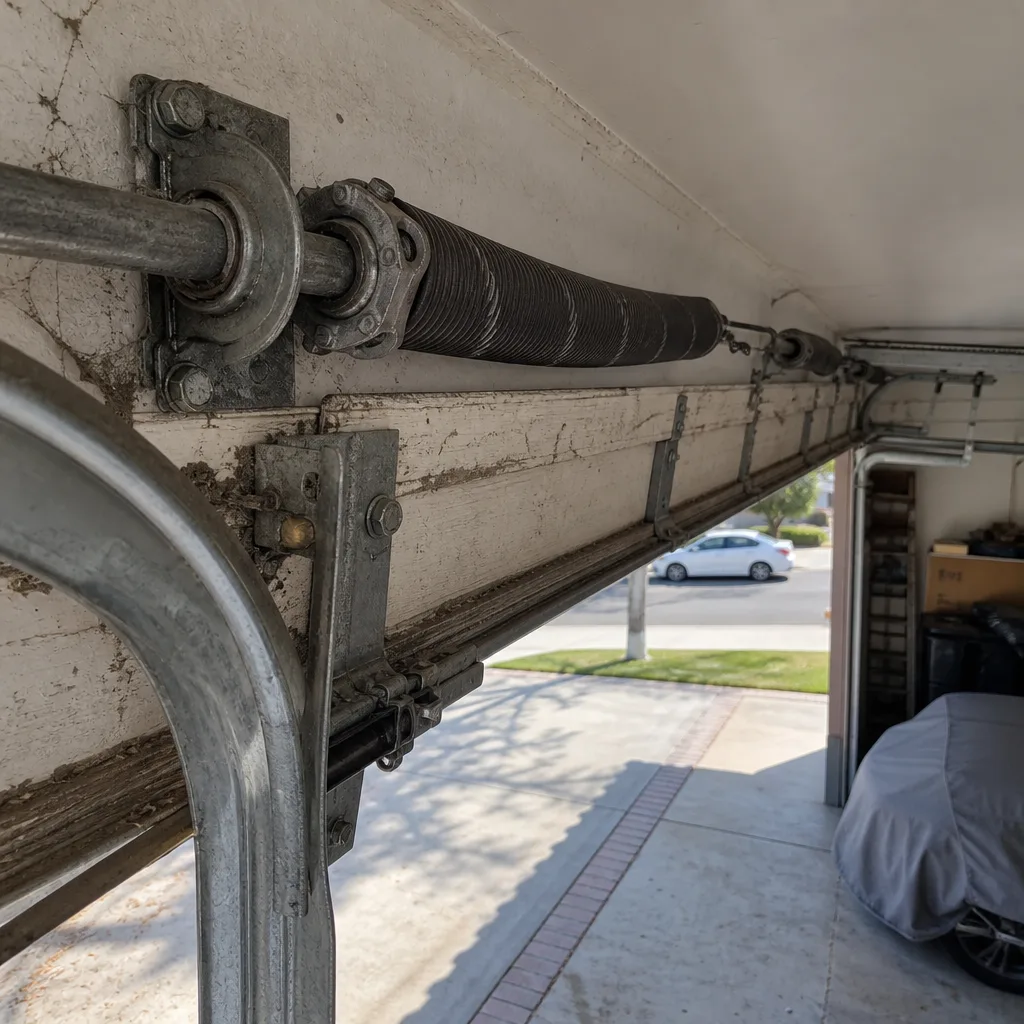
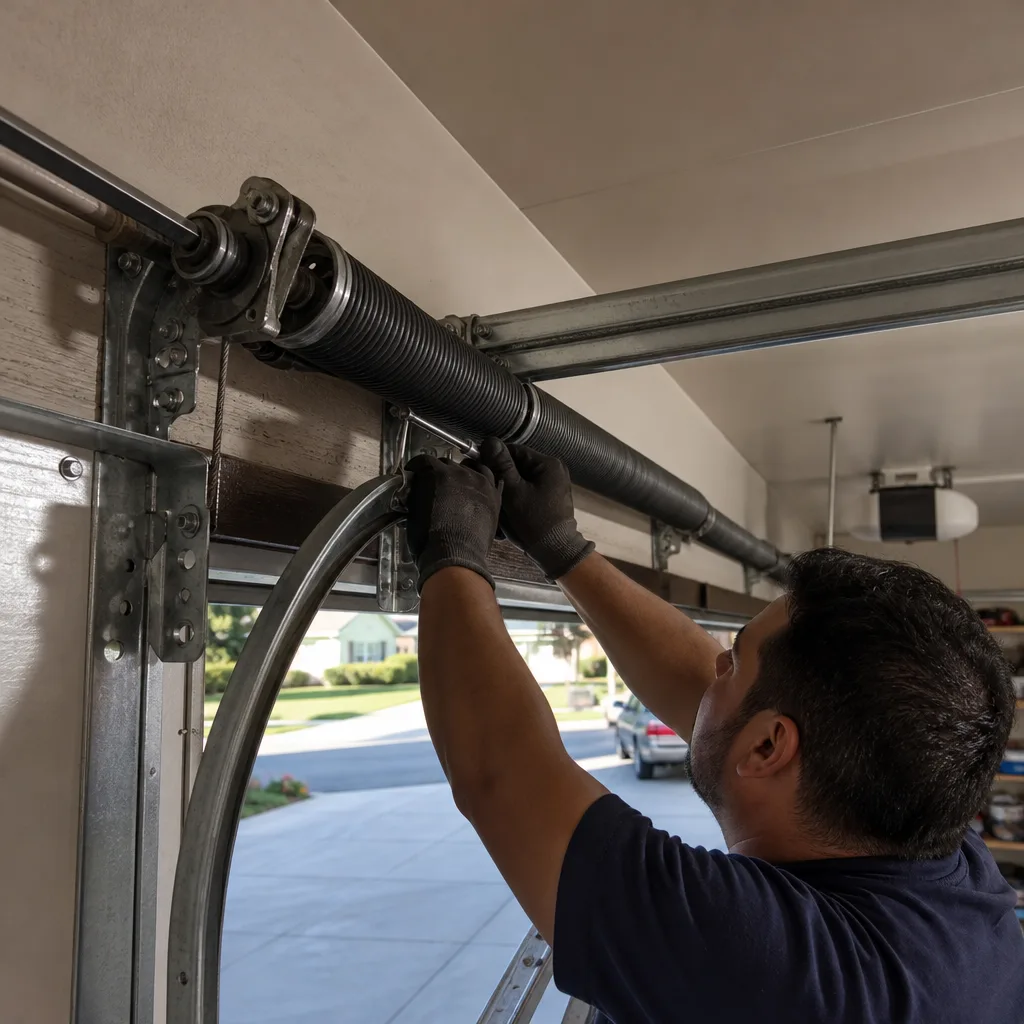
We need to be blunt here because most DIY content soft-pedals this. Torsion springs are not risky “if you’re not careful.” They’re risky period. The spring sits above the door, mounted to a shaft, and it stores the energy required to lift a door that weighs between 130 and 400 pounds on Baldwin Park’s typical single and double garages. When you wind or unwind that spring, you’re manually loading or unloading that stored energy. The tool you use, a pair of steel winding bars, becomes the only thing between you and a sudden release.
What most YouTube tutorials don’t show is what happens when the winding bar slips. The spring doesn’t just snap; it rotates violently and the bars become projectiles. In residential settings, the injuries we’ve heard about from customers and other technicians include fractured forearms, broken wrists, and lacerations requiring emergency care. The door in a Baldwin Park home on a quiet Saturday morning becomes a serious hazard in under a second.
We recommend treating torsion springs the way you’d treat a main electrical panel: you don’t need to understand it fully to respect that you shouldn’t be inside it without the right training. If your spring is showing a visible gap or the door feels unbalanced, call a garage door repair professional in Baldwin Park and describe what you’re seeing. The diagnostic conversation costs nothing.
California Liability: What Your Homeowner’s Policy Actually Covers
Here’s an angle almost no DIY guide discusses, and it matters specifically in California. If you’re injured while attempting a spring repair on your own door, your health insurance covers your medical care. What it does not cover is lost time from work is irrelevant. Here’s the actual liability question: if you’re doing a repair and a spring snaps, sending the door crashing down on a borrowed tool, a parked car, or a neighbor helping you, your homeowner’s insurance may not automatically cover the resulting damage or injury claim.
California homeowners policies generally cover sudden and accidental damage. But the insurance carrier can argue that an unlicensed, untrained person performing a repair on a high-tension mechanical system constitutes negligence. That’s not a hypothetical. Insurance adjusters in Southern California have denied claims where the homeowner was performing spring work without the proper tools or training because the policyholder assumed responsibility for a known hazard.
In Baldwin Park, where many homes were built between the 1950s and 1970s and may have original or aging spring systems, this matters more. Older extension spring setups on those homes have their own failure modes and are less common in newer construction, but they’re still present. When a professional handles the repair, the liability shifts to their insurance and their warranty. That shift is part of what you’re paying for.
The Honest Cost Math: DIY Savings vs. Professional Warranty
Let’s put real numbers on both sides of the DIY versus professional decision for Baldwin Park homeowners. These are the figures we see in the local market in 2025.
DIY repair: what you’ll actually spend
- Pair of torsion springs: $80 to $150 online, assuming you identify the correct wire size, inside diameter, and length
- Winding bars: $25 to $40 for a usable set
- Center bearing or cable replacement parts: $30 to $70
- Your time: 3 to 6 hours for a first attempt, including research, tool setup, and problem-solving
- Total cash outlay: roughly $135 to $260
Professional repair: what you’re actually buying
- Torsion spring replacement on a standard door: $220 to $380 in Baldwin Park, including parts and labor
- Same-day diagnosis: most local companies do not charge for the trip if they do the work
- Warranty: typically covers parts and labor for an agreed period, so if the spring fails prematurely, the callback is free
- Total cash outlay: $220 to $380, with no additional tool purchase and no time investment
The real comparison is not $135 versus $220. It’s $135 plus your afternoon plus zero warranty versus $220 with a warranty and a known outcome. If the DIY spring is mis-wound or fails six months later, you’re doing the job again at full cost. Make the same mistake with a professional repair and the callback is on them. That’s the math that makes Foxwood Garage Door Repair home service the rational choice for most Baldwin Park residents.
What’s Actually in a DIY Garage Door Kit
Search “garage door repair kit” online and you’ll see kits priced from $40 to $200. The packaging implies completeness. Let’s look at what you’re actually getting.
What most kits include:
- Replacement springs (often with incorrect or unspecified wire gauge)
- Basic hardware like hinges, rollers, and brackets
- Generic installation instructions that are not door-specific
- Small tools that are not adequate for the job
What most kits do not include:
- Properly sized winding bars for your specific spring diameter
- Torque specifications for your specific door weight
- A cable tension gauge or any way to verify cable tension
- Any warranty beyond the manufacturer’s limited parts-only coverage
The kits cut corners in the places where precision matters. A spring with the wrong wire gauge will lift the door too fast or too slow, which then strains the opener motor and the cables. In our work on garage door opener repair in Baldwin Park, we frequently see openers that have been damaged by badly matched springs installed from DIY kits. The door goes up, so the homeowner thinks it worked. Six months later, the motor burns out, and the fix now costs more than the original professional spring job would have.
The Middle Path: Buying Your Own Parts
Some Baldwin Park homeowners want the savings of sourcing parts without doing the dangerous work. That’s a reasonable position. The question is whether a professional contractor will install parts you purchased yourself.
The answer in this market is mixed. Many companies will not install customer-supplied parts for liability reasons. They can’t verify the part’s history, and they can’t warranty a component they didn’t source. If that spring fails, it’s unclear who’s responsible. Some independents will do labor-only installs, but that’s becoming less common in Baldwin Park and across the San Gabriel Valley.
Where the middle path does work well: non-tension components. If you want to buy your own weatherstripping, rollers, or a new keypad remote, a technician will typically install those while doing other work. It’s the springs and cables where customer-supplied parts get declined. When we’re asked about this, we explain that brand-matched parts for LiftMaster, Chamberlain, Clopay, and Genie systems are part of why a professional job costs what it does. The part is sourced to spec, verified on arrival, and warranted by the installer.
Baldwin Park Specifics: Climate, Codes, and Local Market Reality
Baldwin Park sits in the San Gabriel Valley, where summer temperatures routinely hit the high 90s and the air is dry for most of the year. That climate affects garage door systems in two specific ways.
First, heat cycling shortens spring life. Torsion springs are rated for a certain number of cycles, typically 10,000. Every time the door opens and closes, that’s one cycle. In Baldwin Park, where homeowners park in the garage and use the door as the primary entry point, a door might cycle four to six times per day. That’s 1,500 to 2,000 cycles per year, meaning a typical spring lasts about five to seven years before metal fatigue becomes a real concern.
Second, dry heat accelerates lubricant breakdown. The white lithium grease or silicone spray you apply to rollers and hinges evaporates faster here than in coastal climates. We recommend re-lubricating twice a year in Baldwin Park, not the once-a-year schedule that works in more humid areas.
On the code side, Baldwin Park follows California Building Standards Code, which includes Title 24 energy requirements. Garage doors in new construction and major remodels must meet specific insulation values. That’s not a DIY consideration for repairs, but it does mean that if your door is old enough that you’re considering a full replacement, a professional garage door installation in Baldwin Park is going to include the code compliance work that a homeowner might not know exists until an inspector flags it.
Common Mistakes to Avoid
- Using a screwdriver as a winding bar. This is the single most dangerous shortcut we see referenced in DIY forums. A screwdriver shaft is not hardened steel and will bend under spring load, causing the spring to slip. The result is a violent release. Never substitute tools on a torsion spring.
- Replacing one spring on a two-spring door. When one spring fails, the other is at the same cycle life. Replacing only the failed one means the old spring will likely fail months later, and the door will be unbalanced in the meantime. Always replace both springs on a double-spring door.
- Ignoring the balance test. A properly balanced door should stay in place when opened halfway. If it creeps up or down, the springs are wrong. Many Baldwin Park homeowners skip this check after a DIY job and only notice something is off when the opener starts struggling.
- Lubricating the track. Tracks should be clean and dry. Lubricating them makes the rollers slide instead of roll, which wears out the roller bearings faster. Lubricate the hinges, rollers, and springs, not the track.
- Trying to adjust a Genie or LiftMaster opener’s force settings to compensate for a bad spring. The opener is not designed to muscle through a door that the springs can’t lift. Cranking up the force setting just masks the problem and burns out the motor. This is one of the most common issues we resolve on opener repair calls in Baldwin Park.
- Overlooking the cable drums after a spring job. If the cables aren’t seated correctly on the drums, the door will lift unevenly and can jam mid-travel. This is a post-DIY issue we see regularly, and it’s not always visible until the door is under load.
See the difference
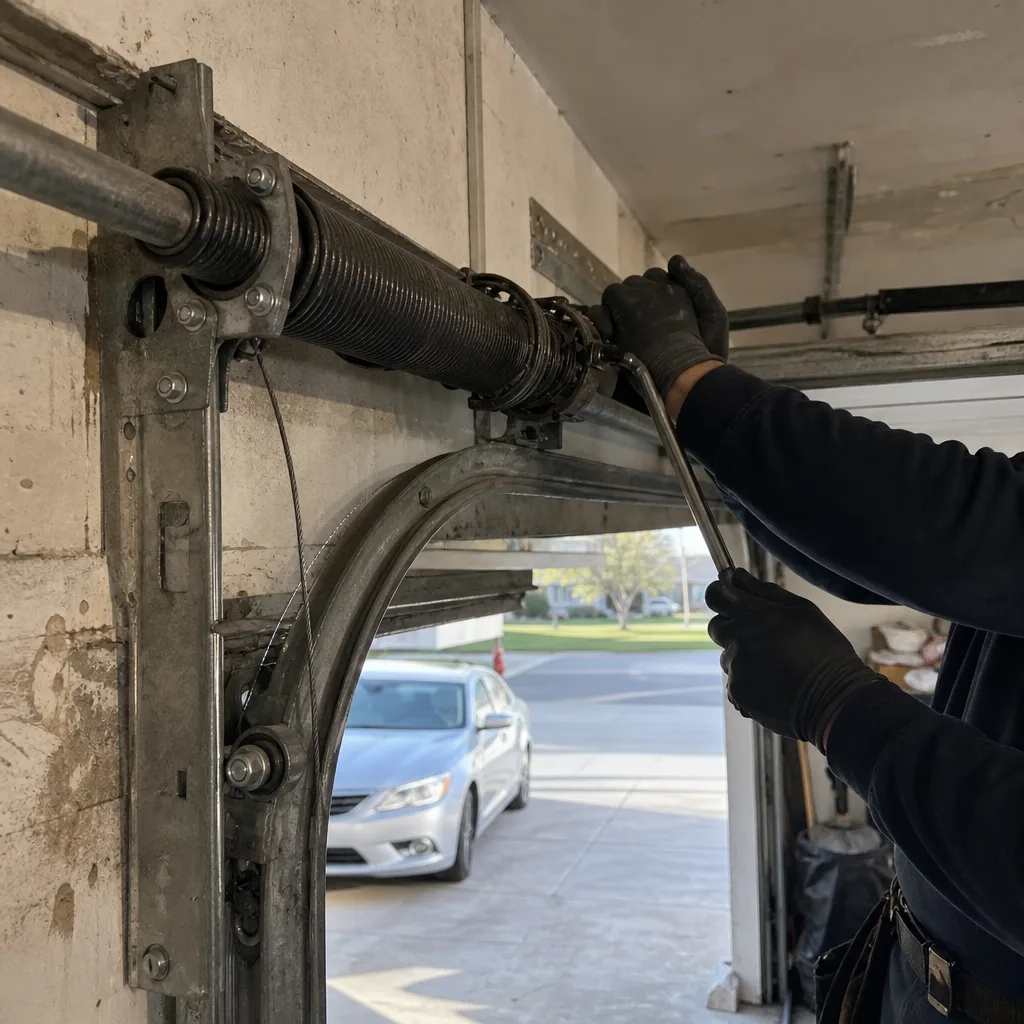 Before
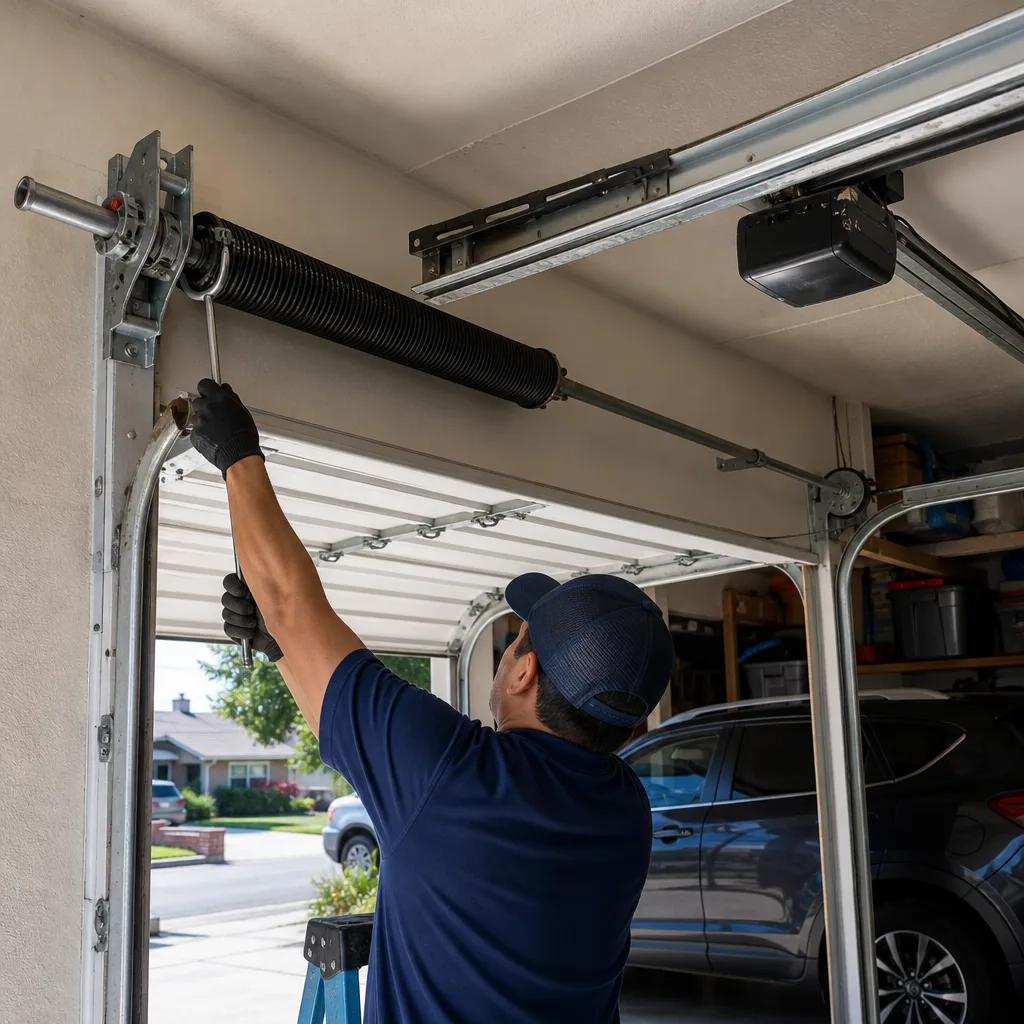 After
 Before
 After
 Before
 After
When to Call a Professional
Call a professional when the door won’t open at all, when a spring is visibly broken, when the cables are frayed or off the drum, when the door sags on one side, or when the opener runs but the door doesn’t move. These are all symptoms of underlying mechanical failures that won’t resolve with a YouTube tutorial and a wrench. If the door feels unusually heavy when you try to lift it manually, that’s a spring issue. If you hear a loud bang from the garage, that’s a spring snapping. Both are calls, not projects. Foxwood Garage Door Repair offers free estimates in Baldwin Park. Call (866) 714-6304 and describe what you’re seeing. We’ll tell you honestly whether it’s a call you need to make or a fix you can handle yourself.
Frequently Asked Questions
Spring replacement in Baldwin Park typically runs $220 to $380 for a standard double-spring door, including parts, labor, and the service call. The range exists because spring size and door weight vary. Call (866) 714-6304 for an exact quote on your door. We’ll give you a firm price before any work begins.
No. Torsion spring replacement is not safe for a homeowner regardless of mechanical experience because the springs hold enough tension to cause serious injury if a winding bar slips. This is the one garage door task where the risk profile doesn’t change with skill level; it changes with proper tooling and training. We recommend treating it like electrical panel work and calling a professional.
You can safely replace weatherstripping, realign photo-eye sensors, reprogram remotes and keypads, clean tracks, tighten non-tension bolts, and lubricate hinges and rollers. These tasks require no contact with tension components and carry minimal injury risk if you use a ladder properly.
No. A professional quote includes the full scope of work. At Foxwood Garage Door Repair, the price we quote is the price you pay, agreed before any work starts. If additional issues are found during the repair, we discuss them with you and get your approval before proceeding.
Most policies exclude mechanical wear and tear, including spring failure, so you’ll typically pay out of pocket for spring and cable replacement. If a garage door incident causes damage to your car or home, a claim may be possible, but that depends on your policy’s specific terms and deductible.
Yes. Our technicians carry common spring sizes, cables, rollers, hinges, and opener parts for the brands we service, including LiftMaster, Chamberlain, Genie, and Clopay. Most repair visits in Baldwin Park are resolved in a single trip.
The Bottom Line
The DIY versus professional question on garage doors comes down to energy. If the component you’re touching is under tension, it’s a professional job. If it’s not, it’s weekend maintenance. That framework keeps you safe, keeps your door working, and keeps Baldwin Park garages from becoming the subject of a cautionary story. Do the weatherstripping, do the sensor alignment, do the remote programming. Don’t touch the springs, the cables, or the header brackets. And when you need a professional opinion, call the team that works on the brand you have, not the brand we prefer.
Written by the team at Foxwood Garage Door Repair, serving Baldwin Park since 2015.